








Click here to listen to the Audio version of this story!
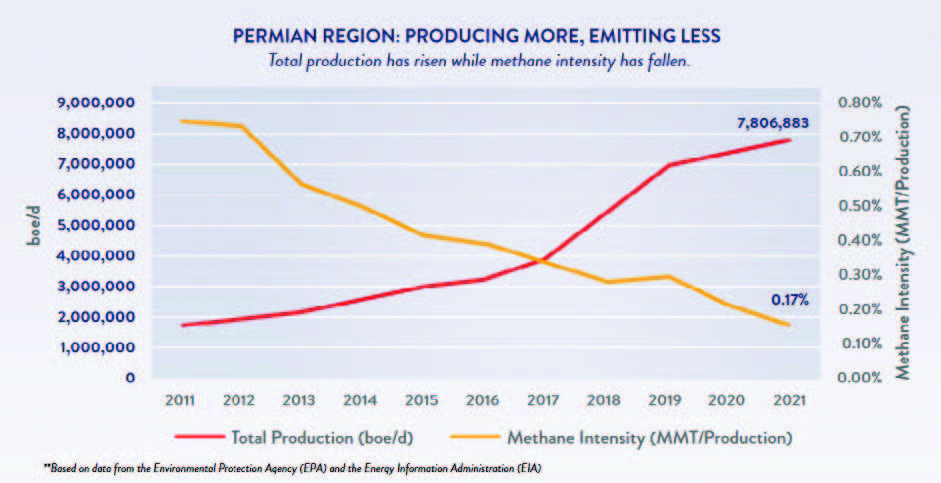
 While there will always be pollution associated with hydrocarbon production, the Permian Basin is on the forefront of many technologies and operational practices that are reducing emissions at scale—innovations that often lead the way globally, even amid intense scrutiny.
The Environmental Landscape: Hard Problems, Harder Limits
Despite progress, the Permian’s basic industrial nature means it confronts environmental challenges that are difficult to fully eliminate.
Consider methane: the stealth climate driver.


Methane emissions from oil and gas operations in the Permian Basin have historically been a major concern because methane is a potent greenhouse gas with a high global warming potential. Despite progress, smaller leaks remain widespread, and researchers emphasize that super-emitters, whether large sites or many small sources, require vastly improved detection and repair systems. Addressing both major and minor sources is necessary to significantly cut methane output in a field with over 130,000 active well sites.
New technological approaches have made methane visible in ways that were impossible a decade ago, from satellites to aerial surveys and continuous sensors. Even with advanced technology the sheer volume of wells and pipelines across a region roughly the size of Great Britain makes complete mitigation difficult.
Real Progress—and Real Limits
Recent comprehensive analyses show that methane emissions intensity in the Permian has dropped substantially: more than 50 percent over the 2022–2024 period thanks to better equipment, AI-driven detection, and tighter operations, and absolute emissions have declined even as production grew. However, these gains are a testament to heavy investment and advanced technology, not simple fixes.
And then there’s produced water—a byproduct turned liability.Permian wells produce more than three barrels of water for every barrel of oil creating roughly 20–21 million barrels of produced water every day. Only about 25 percent of that water is used in completion operations, which means the rest must be disposed of or reused through costly infrastructure.
Carbon Dioxide: Long-term, Growing Risk
Carbon dioxide emissions from the Basin are tied both to combustion and to broader industrial energy consumption. Even with methane and other gases controlled more aggressively, carbon dioxide remains a central climate challenge because it accumulates in the atmosphere over decades.
Taken together, these three—methane, CO₂, and produced water—define the hard limits of current mitigation approaches. Better detection and patching reduce emissions, recycling helps manage water, and carbon capture attempts to turn climate liability into a resource. But each has technological limits, economic costs, and regulatory friction that make comprehensive cleanup an ongoing effort.

The Rise of CCUS in the Permian

Steve Melzer
Carbon Capture, Utilization, and Storage (CCUS) has become a core strategy in lowering emissions across heavy industrial sectors, and nowhere is this more relevant than in the Permian, where decades of Enhanced Oil Recovery (EOR) with CO₂ give the Basin a practical advantage.
Steve Melzer, Principal at Melzer Consulting, has been one of the most articulate voices on CCUS deployment in the region:
“Rapid deployment of carbon capture tied to EOR is a no-brainer. When the environment needs carbon reduction, U.S. policy incentivizes CO₂ capture, and there’s already a productive use for that CO₂ underground, the pieces are already on the board.”
Melzer’s insight gets to the heart of the U.S. policy architecture: carbon capture isn’t just a climate tool; it’s an economic one.
45Q: Turning Policy into Dollars
One of the principal drivers for CCUS investment is the Section 45Q tax credit, which rewards companies for each ton of CO₂ captured and securely stored or used in a qualifying way. Eligible projects can claim credits worth $17–$85 per metric ton of qualified carbon dioxide sequestered and higher values apply for direct air capture facilities and unused CO₂ sales.
These credits apply not just to permanent geological storage, but also when captured CO₂ is used in EOR, making CCUS projects competitive where they once were not. Increasing the value of the EOR credit to parity with permanent sequestration, an idea that has more than gained traction in Washington under the current Trump administration, reflects how policy is evolving in response to industry and national energy security interest.
CCUS is Not Theoretical
Permian oilfields have been injecting CO₂ for enhanced oil recovery since the 1980s, meaning the subsurface knowledge, pipeline infrastructure, and injection expertise already exist. CCUS simply builds on that legacy and ties it to climate policy. This means that as capture technologies improve and incentives remain, Permian operators can sequester carbon while maintaining production efficiency.
Yogashri Pradham, Founder and CEO at IronLady Energy Advisors says,
“One would be well advised to implement EOR in a well’s life cycle but not so much later that production has dropped off.”
Cement and Low-Carbon Materials: A Surprising Player

Yogashri Pradham
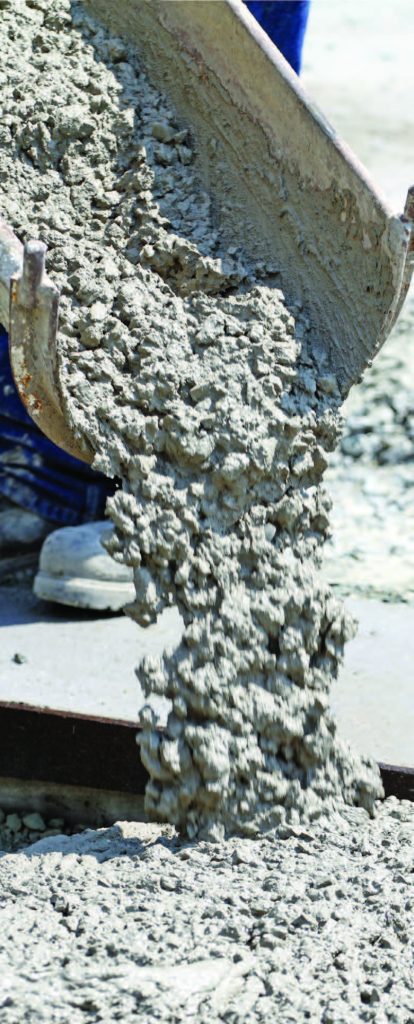
Steel and rigs get the attention, but concrete is the Permian’s quiet climate problem. Often overlooked in energy coverage is the environmental cost of building the infrastructure itself. Cement and concrete are foundational to pads, casing, roads, plants, and pipelines—and they have their own carbon footprint:
- Cement production globally accounts for roughly 8 percent of worldwide CO₂ emissions, releasing about 1.6
 billion metric tons of CO₂ annually.
 - On average, each ton of cement produced releases nearly one ton of CO₂ due to both combustion and the chemical process of calcination.
- Worldwide use of concrete —cement mixed with aggregate—exceeds 10 billion tons every year.
- In the United States, cement production contributes roughly 71 million metric tons of CO₂ annually, or about 4.4 percent of industrial sector emissions.

By incorporating low-carbon cement technologies, such as Limestone Calcined Clay Cement (LC³), which can cut manufacturing CO₂ emissions by up to 30–40 percent compared to ordinary Portland cement, the industry, including oilfield infrastructure builders, can significantly reduce embodied carbon in facilities.
Produced Water—From Nuisance to Asset
Produced water is often misunderstood by the public, a fact highlighted when environmental protestors demonstrated against ExxonMobil at events like the 2025 Albuquerque Balloon Festival, rallying around concerns that produced water could never be clean enough for beneficial reuse, theoretically for any application.
But industry, regulators, and scientists see produced water differently: as an asset and a managed resource, not a liability.
Permian Wells Produce More Water Than Oil
Estimates show more than 20 million barrels of produced water daily, often at ratios of three to five barrels of water (or more) for every barrel of oil. This sheer volume drives new markets for water recycling, treatment, and long-haul disposal pipelines.
Texas regulators such as the Texas Commission on Environmental Quality (TCEQ) are increasingly supportive of infrastructure that safely recycles and reuses produced water, moving away from truck hauling and ad hoc disposal in favor of centralized treatment hubs and pipelines that reduce emissions and traffic. As has been noted many times in these pages and elsewhere, increased injection of produced water has caused issues, including land deformation and induced seismicity. From notorious abandoned well blow-outs to leeching through well bores, the pressure in the formations is no longer sustainable to continued injection.
This shift reflects a deeper consensus: water is now an operational asset. It’s used for fracturing, drilling, dust control, and, increasingly, beneficial reuse outside traditional oilfield roles, including agriculture and municipal partnerships. In the rapid pace of AI data center development, produced water reuse is seen as a way to cool those endless racks of power-hungry chips and servers, while abundant natural gas is used to power them. The two things the Permian happens to have enough to spare, seem to be positioned perfectly for the future.
The Permian’s Smart Take: Leading Despite Clouds
Taken together, methane mitigation, CCUS with 45Q incentives, low-carbon materials, and sophisticated water management bear witness that the Permian Basin is not defending an industrial past so much as shaping an industrial future under climate pressure.
The narrative that only external critics see—pollution, methane plumes, carbon clouds—is real, but incomplete. The Basin’s operators and regulators are actively investing in solutions that reduce absolute emissions even as production continues to grow. Indeed, recent comprehensive assessments show that absolute greenhouse gas emissions in the Permian declined nearly 20 percent between 2022 and 2024, even while output increased.
Some key takeaways that show the forward lean by industry and regulators:
- Methane isn’t ignored—it’s being measured and reduced with advanced detection, AI, aerial surveys, and satellite data.
- Carbon capture is financially incentivized and technically feasible, building on decades of EOR experience and supported by tax credits that align climate and commercial goals.
- The concrete behind the scenes matters too, and low-carbon cement innovations offer a pathway to shrinking the embodied carbon of oilfield infrastructure.
- Produced water is transitioning from problem to managed resource, driven by regulation, technology, infrastructure investment, and local Permian communities.
Yes, a methane cloud hangs over the shores of Lake Produced Water in the Permian, but so does a cloud of innovation and the motivation of necessity. The Basin’s environmental evolution isn’t complete, and it isn’t flawless, but it’s happening faster and more broadly than outside observers often appreciate. But we’ll keep doing what needs to be done, as we always have, regardless of what is said about us.
Sources: AP News, EnergyTech, Midland Reporter-Telegram, IRS, Reuters, World Economic Forum, Wikipedia, Clean Air Task Force, PR Newswire

Christian Lombardini
Christian Lombardini, a former field operator and manager, is now a communications and content consultant for oil & gas companies and creators. You can find Christian and his The Oilfield Leader Podcast on LinkedIn.