









“You can’t tell the players without a scorecard,” was the ancient baseball vendor’s cry. Today’s Permian Basin scorecards can only be tracked digitally, which is good, because they’re always in flux.
In this story longtime oilfield stalwart Eric Danos, owner of Danos, takes us through the ins and outs of the decision-making process of acquisitions, having done seven of them since 2014. Then the cofounders of DUVFIT reveal not only their new technology, but the business decision behind starting it now in the Permian.
It’s All About Values
Diversification. That’s what started Danos’s current expansion philosophy in 2020. It came from the Pandemic and the oil and gas industry’s pivot to renewables, said Eric Danos, CEO of Danos Ventures, and a great-grandson of cofounder Allen Danos, Sr.

Eric Danos

“For 75 years up to that time, we had built a great business just by following our customers in the oil and gas business,” Danos said. But in 2020 through about 2024, “They were going to be anything but oil and gas companies. They were going to be solar, they were going to be wind” [among other sources].
Because of that the company momentarily thought it needed to join that club, to stay relevant. Quickly, however, Danos said, “we felt like the world was going to come back to oil and gas, and services in particular and upstream in particular.” So, they decided instead to grow within the industry they already knew.
From there, the growth-through-acquisition strategy has been a work in progress, He said they grew organically for years, then slowly began to develop a new idea.
“We discovered this strategy through the work that we’ve done in setting up and doing some early acquisitions. It’s turned into a pretty ambitious five-year goal where a significant amount of the company’s growth comes through acquisition.”
Pacing
While he described the company’s ambitions as “aggressive” there is a limit. “I also want to manage what impact that has on our ability to serve customers, how our employees feel about it, and how much stress we put into the organization.”
The two main principles are, first, whether an opportunity is a good investment, and second, whether the potential acquisition has similar values and operations, so that assimilation can be relatively efficient.
Other points include whether the new company would provide current Danos employees with a chance to grow, if there is appropriate overlap/growth in competency and in geography. Currently Danos is focused on West Texas, South Texas, and the Gulf of Mexico, he said.
Today’s market offers “lots and lots and lots” of opportunities, but those principles filter them down to the optimal choices. Diversification is still on the list, but the view is more about more settled sectors like downstream oil and gas and industrial than in renewables.
Integration: When One Plus One Equals Five
M&A aftermaths range from Chevron laying off more than 600 Hess employees in 2025, to Travis Stice noting in the January PBOG issue that Diamondback did no forced layoffs when it bought Endeavor. For Danos as a company, the integration process has a formula, but it’s far from one-size-fits-all—and they approach it “carefully,” from two sides, said Danos.
“One is the customer side of it, and one is the people side of it. And you’ve got to do those things very, very carefully.”
The key is, “How do we preserve all the goodness that we’re acquiring there and make that part of our organization? One plus one equals five, not two.”
That includes customers as well as employees. “We’ll sit with them and say, ‘What do you like about the service being provided? What’s unique? Why have you bought services from them?’” then strive to preserve that dynamic.
“Sometimes it means go fast. Sometimes it means go slow. It always means careful and thoughtful planning.” They’ve even hired an “integration manager” to focus specifically on this process.
Sometimes it means not integrating at all. “In some cases, the right answer is you don’t integrate and we leave these companies that we buy as a standalone and let them continue to serve their customers because that might be what’s most effective, at least in the short term.”
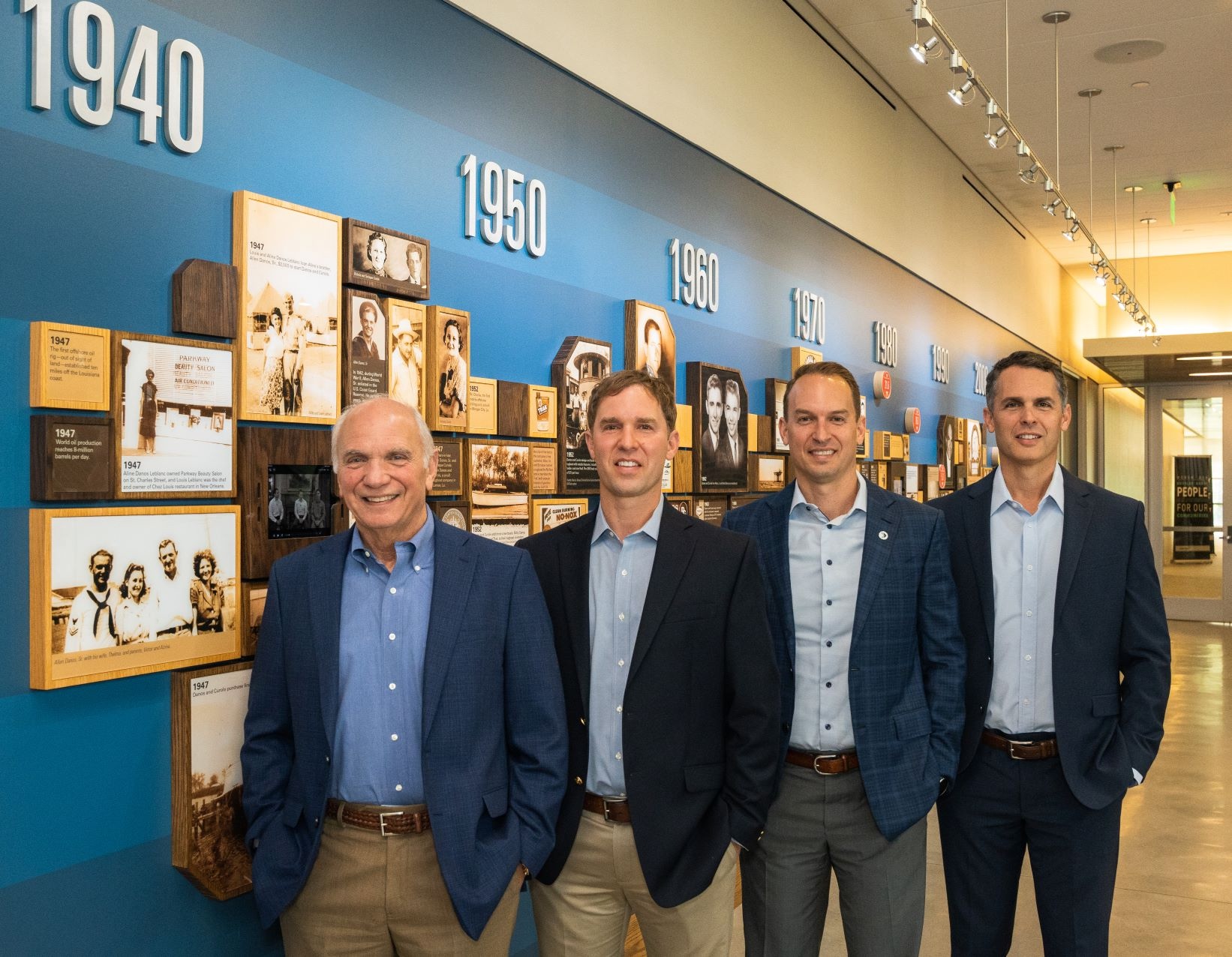
From left: Hank, Mark, Paul, and Eric Danos.
Who’s Selling?
Danos listed three main reasons he sees for companies to sell. One is the build-and-sell model, where someone starts a company with the intent of making money by selling it. Another is a larger company that decides to spin off a non-core sector, one that is less efficient to manage.
The biggest reason, however, is lack of succession planning, where “An owner/founder has operated his business for a number of years, then he gets near the end of his time for managing the business and he just hasn’t created good options for himself and needs to exit the business.”
Generally, that category is populated by small, niche businesses that have decided to stay narrowly focused, and are mostly run by the founder.
And that is one of Eric Danos’s favorite parts of the evaluation process—interviewing those founders and hearing their stories, their dreams, their vision that started their companies. “They have something that they want to preserve even through a transaction and so you get a chance to understand what that is and hopefully treat it respectfully.”
Only Giants Need Apply?
However, that brings up another question. Previous stories in this space have quoted industry insiders as saying today’s M&A frenzy requires even service companies to “merge or die.” Is there still room for small startups and niche companies?
Danos itself began in 1947 with $2,000, two brothers-in-law, and a boat named the Yoyo, to do some Gulf of Mexico service work. Eric Danos sees room for both.
“I think there’s room for great small service companies to thrive,” he said. “Small service companies are often the innovators, and they are great at addressing unique problems that, sometimes, large companies either can’t see or just can’t innovate around. They’re agile, they’re entrepreneurial, they know how to solve problems. There’s certainly a space for them in these niche or relationship driven services.”
Still, challenges exist for smaller companies, as ever-larger operators see financial and efficiency advantages in using one large service company across counties, basins, and state lines.
In that light, another Danos strategy has been to invest in smaller companies without buying them outright. “We’ve been an investor in multiple small service companies,” he said, adding, “they solve some really significant problems and create opportunities.”
Sometimes when Danos buys a smaller firm, as stated above, they leave the company freestanding, at least for a time, while making decisions regarding whether to leave it that way or to more fully assimilate into the larger corporation.
Speaking of Startups
Here’s an example of the new ideas a new company can contribute to the industry. Oil and gas industry veterans David Holcomb and Corbin Coyes have teamed up as founding partners to form DualHelical, aimed at using a patent-pending flow management tool, known as Dual Helical Vortex Flow Induction Tool (DUVFIT), to reduce friction, therefore costs, on liquid flows of a wide variety of types. This can drastically cut energy costs for everything liquid, from fracturing to oil and NGL pipelines to produced water disposal.
They’re starting with oil and gas because that’s home turf to both, but they see applications beyond that, in agriculture, medical, marine, IT, and more.
Their dual helical flow model is an adaptation of previous flow models. Both had worked with helical flow to reduce friction in liquid movement. A chance meeting led to a discussion and to Holcomb improving and completing a development of Coyes’. The resulting design has worked well in the lab.
At this writing they are field testing it with a large independent, and they have some very promising results from another field test, discussed further along in the story.
“We’re at a point where once this pilot goes, we get a few thousand of these ordered, and then we’re rolling,” said Coyes.
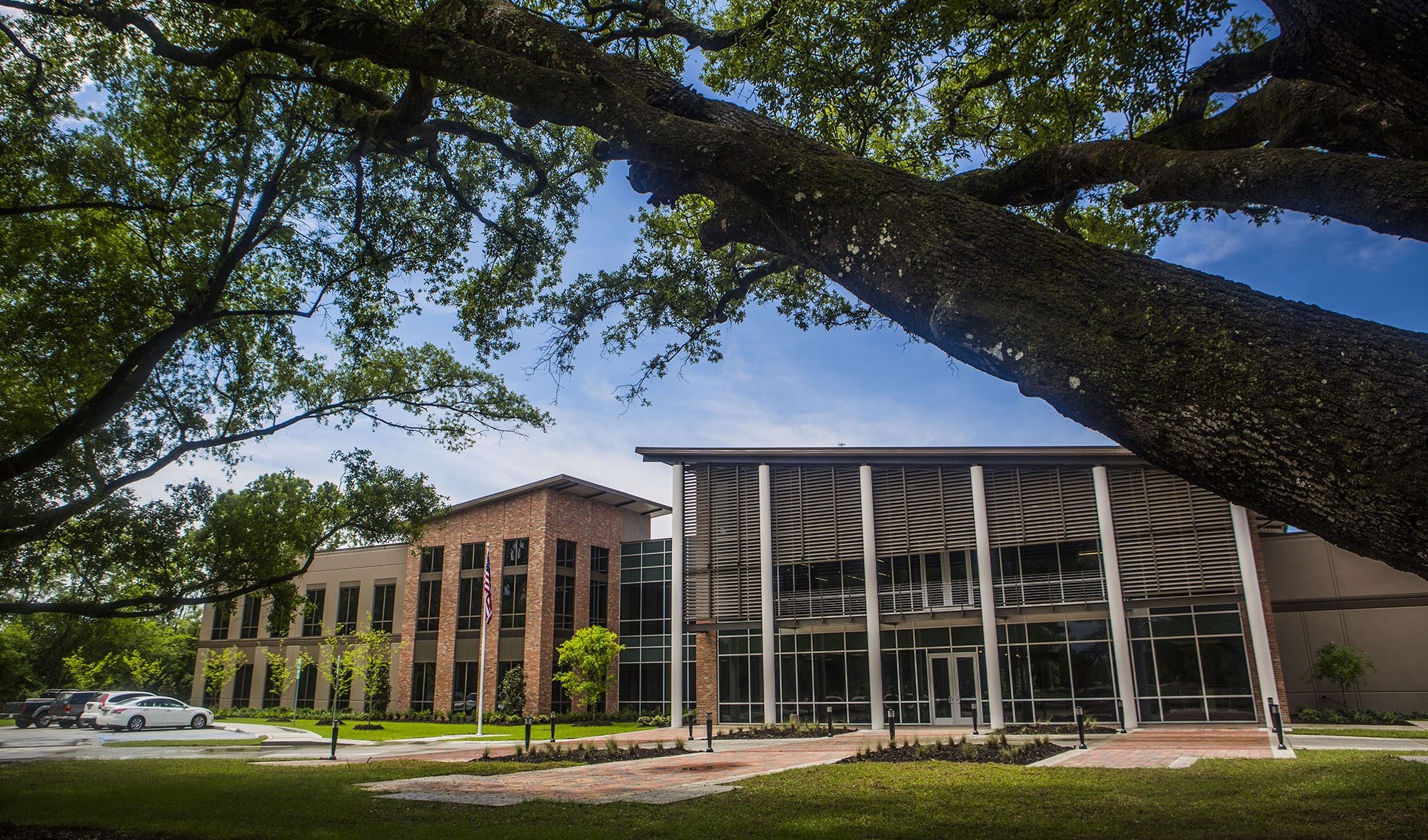
Just over a year ago, Danos and AXion Logistics formed a strategic partnership to deliver comprehensive supply chain management and logistics, known as fourth-party logistics (4PL), to the energy industry. The collaboration combines Danos’ extensive history in upstream and midstream supply chain management with Axion Logistics’ expertise in downstream logistics and transportation, creating a comprehensive approach to optimizing supply chain operations.
(Misty Leigh McElroy)
Self-Funded
Starting without private equity can make the money tight at first, but Holcomb and Coyes are thinking long term, and they see many PE firms as looking for a three-to-five-year payout. Coyes noted that sometimes a new product gets traction that soon but are prepared to stay in gear longer if necessary. Once the pilot is completed, they hope to order several thousand to be manufactured, and gear up for sales.
Reducing Friction AND Friction Reducers
Here is an overview of how DUVFIT works.
It can be sized to fit virtually any pipe diameter, and fits in the existing line with little effort (see picture). Its design includes two helical channels, which rotate in opposite directions, creating a unique dual helical flow regime These channels put the fluid into a helical path, which creates vortices.
The number of devices needed depends mainly on the number and angle of turns in the pipe. Turns of 45° or more may require an additional device. For straight or curved lengths, the effective distance is yet to be determined but can likely be measured in miles.
From there the two vortices interact, disrupting the laminar flow and reducing the fluid’s boundary layer thickness near the tubing walls.
The disrupted boundary layer decreases the effective viscosity near the wall, resulting in reduced frictional losses. And the vortices promote mixing, enhancing heat transfer and mass transport.
Bottom Line Benefits
Energy efficiency and heat transfer are at the top of this list. First, by reducing friction, the DHVF decreases the energy needed for pumps to push the liquid through. And by enhancing heat transfer, it benefits heat exchanges and cooling systems.
Produced Water and Hydraulic Fracturing Applications
Holcomb and Coyes stress that the DUVFIT’s possible applications are extensive and varied, including even the typical garden hose. But oilfield produced water and fracturing are areas where they see they could save 50-70 percent on pumping costs.
As earthquakes further limit saltwater disposal (SWD) in top producing areas, produced water must travel greater distances to be safely disposed of. Every extra pipeline mile involves pumping costs.
“Everything is horsepower and cost,” said Holcomb. “If we can lower the cost of the electricity and horsepower required to move fluid, then I think we’ve achieved our goal.”
Horsepower is one key cost for fracturing, but there are greater ramifications in this realm. If their tool can reduce the cost of pushing great amounts of water deep into the formation—and do that without the help of polymers—it will be a significant saving.
“The chemical market for friction reduction last year was around $4.5 billion. If we can either eliminate that or cut it significantly, I think we can do the industry, service industry a big favor,” Holcomb said. “Significantly” could translate to 50-70% of horsepower and electricity costs.
In the process, DUVFIT is expected to improve production because by effectively increasing the flow, the frac fluids and proppants would be driven deeper into the formation’s pores more efficiently, releasing more oil.
In the Field
In a field test conducted by Caza Oil and Gas (which was acquired by 3G Operating, now owned by Ridge Runner Resources) in southeast New Mexico, DUVFITs were tested in a 180-foot line, with measurements taken across a 60-foot section running from the jet pump to the wellhead downhole.
The fluid used was 100 percent produced water, returning from the reservoir with a 90-10 water-to-oil ratio. Upon returning from the reservoir, the oil and water were separated, with the oil directed to storage tanks and the water conditioned to flow back through the DUVFIT devices on surface, and going back downhole.
Coyes explained, “Essentially, we were only pumping production water through the DUVFIT for this case study.”
The initial test lasted just over a month, followed by a three-month period where two DUVFITs were run on the 60-foot surface line. Later, one DUVFIT was installed directly on top of the wellhead, pumping water straight down to the bottom-hole reservoir with negligible bends in the piping.
Results
The DUVFIT installation resulted in a net revenue increase of $21,045 per month, based on April 2025 oil prices and $35 per barrel operating costs.
The improvement was attributed to increasing fluid flow without raising pump pressure. Results were validated by installing pressure sensors before and after the device. The results showed a 10 percent reduction in pressure drop and a 69 percent decrease in pressure fluctuations at the downstream (DH) side compared to the baseline (BL) Valve 1.
The DUVFIT, when placed in the correct straight-line configuration, resulted in a 10 percent monthly reduction in power consumption by the end of testing. This was achieved through improved flow dynamics as the DUVFIT effectively reduced pipe wall fluid friction.
Good Timing
Holcomb and Coyes say the timing is good to start a company and to release DUVFIT in the Permian Basin. “The blessing here is that we’re entering the market at a time when drilling is so efficient, they can drill these horizontals in a heartbeat, but they still have to hydraulicly fracture every one of them.” In this market, costs for drilling, fracturing, water transfer, and everything else are rising. And getting sufficient power onsite has been a challenge since the Shale Revolution began more than 20 years ago.
For two industry veterans to start up a company featuring new technology with great promise in reducing costs, they believe the door to success is wide open.
They are ready to step through.

Paul Wiseman
Paul Wiseman is a longtime writer in the energy industry.