









Click here to listen to the Audio version of this story!
Usually, all the industry news is about the major operators, and sure, they are influencers and market makers. Beyond the spotlight, however, are a host of hard-working independent producers. Working together, independents actually produce about 83 percent of U.S. oil and 90 percent of its natural gas, according to estimates from the Independent Producers Association of America (IPAA).
Maybe it’s time to turn the spotlight on two Permian-based independents: Discovery Operating and Admiral Permian Resources.
Discovery Operating: Slow and Steady
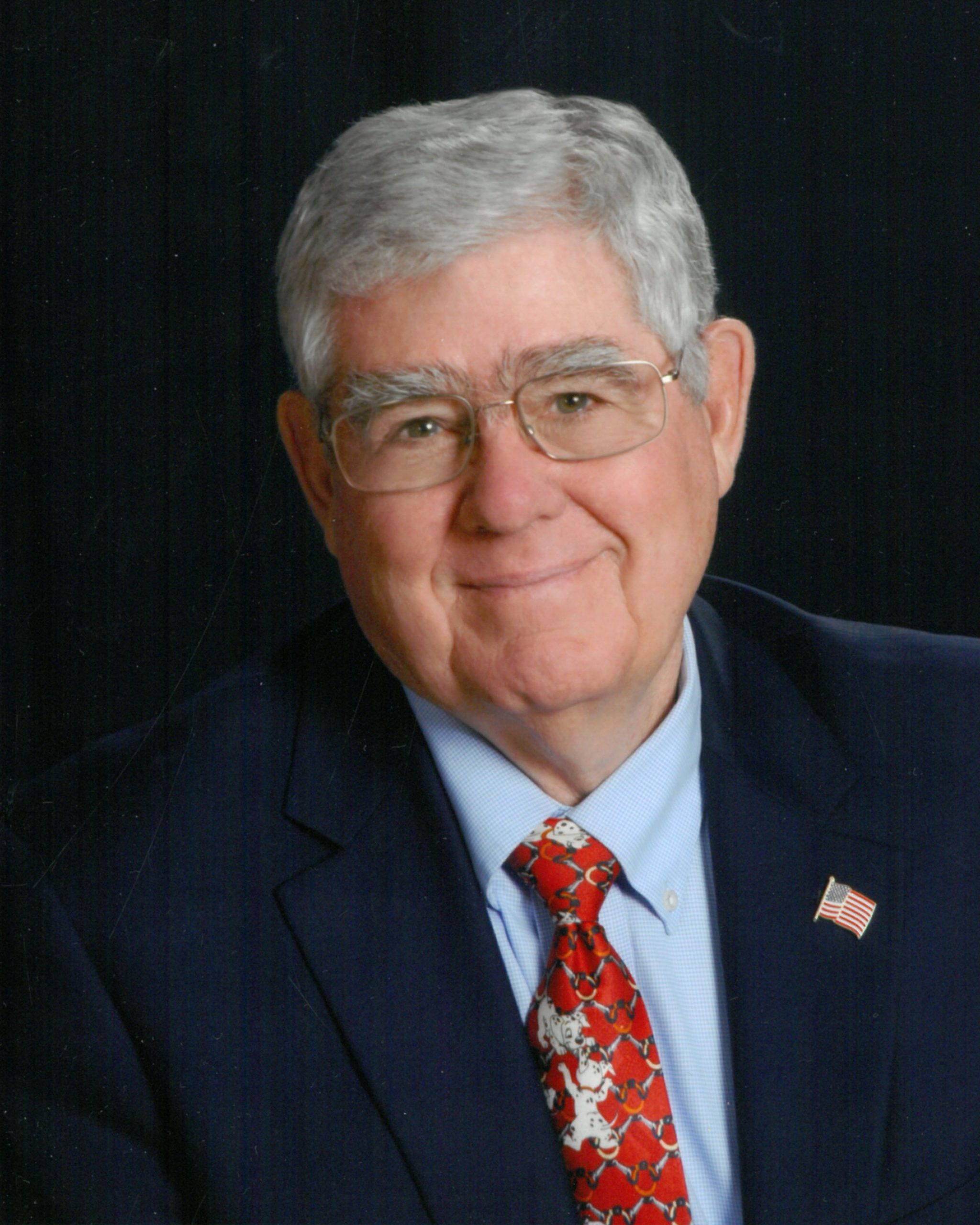
Don Sparks
Don Sparks started Discovery Operating in 1973 with two goals in mind: To “discover” oil (hence the name) and to create a legacy for his family.
Both goals are moving along nicely. Today Discovery Operating has 43 full-time employees, operates 420 wells, produces 14,000 to 18,000 barrels a day and around 20 million cubic feet of associated natural gas.
Those production numbers are hard to pin down on a single day because at any given time a few may be down for a workover or a power outage—and simultaneously a new well or two may be completed and coming online.
In the Beginning
Sparks and business associate and former Midland Mayor Ernest Angelo started Discovery in 1973 with just some ideas for success. In a PBOG story in January of 2023, Sparks recalled working days at Discovery and nights—sometimes until the wee hours—on his consulting business, while his wife, Gwyn, took on extra piano students to keep from depleting their $10,000 in personal savings.
They have indeed discovered fields and technology to develop them. Pioneering the use of cut brine systems in Schleicher County and working with Halliburton to log Wolfcamp and Spraberry shales are some of them. The latter logs are still used to pick landing zones in horizontal wells in the Midland Basin, Sparks has said.
The Discovery Road Map
Discovering new plays requires data and planning. For a new prospect, Sparks said he would examine the geology along with an independent geologist, then mull over the data.
“What you try to do is have a feel on what type of trend that area might be, try to follow that trend, and find some acreage that you can pick up to also develop.” And do it carefully, he added. “We’ve never gone out and leased large, large areas as far as acreage, because when you’re drilling a wildcat, we, with our investors, don’t feel like that’s the way to play the game.”
Money
Speaking of investors, Sparks said much of the company’s investment money comes from within, along with a small cadre of longtime outside investors, some of whom are now in their third generation. That loyalty is greatly appreciated.
“You treat them just like they’re part of your own family when you’re spending their money, [as] it goes right along with ours.” He added, “We’ve been very blessed. That’s the way we like to do it.”
This type of mix lets them keep making their own decisions. Sparks explained, “We’ve never taken equity partners because, at some point in time, the equity partners are going to tell you how they think you ought to run your business. And that’s not what I’m into.”
Some Assembly Lines Required
After fifty years of finding and drilling, the gee-whiz fields have been discovered and the technological leaps have been leapt, Sparks said. “You change up the type of bits you use, but there’s not a whole lot of innovation as far as I can see, because this is more of a manufacturing operation in the Permian right now in the shales. Because we’ve had a lot of presence in the shales. Everybody knows what you’re looking for.”
Improvements still happen, but they are incremental instead of monumental. Changing drill bits or modifying production methods may speed drilling a little or boost production by a few barrels per day, but neither is grabbing headlines or stopping the presses on a newsletter.
When asked if the assembly-line model has reduced overhead, Sparks said its effect was limited.
Still, per-well production is rising significantly as Discovery is plugging old vertical wells and replacing them with horizontals. Three years ago, the company had about the same well count but was producing only about 10,000 bpd, Sparks noted. Today’s 15,000-20,000 is due to the long horizontal laterals.
New that’s Not so New
One of the Permian’s advantages is its multi-layered producing zones. Those areas, known in the jargon as “stacked plays,” could open doors for additional innovation. “Innovation will come as we move away from the wells that we’ve been drilling, which are the Sprayberry, Wolf Camp, the primary wells that we’ve been doing for a while,” he said. “As we move away from those, there’ll be some innovations that’ll change the way we do it.”
One “new” area that’s interesting some operators is the Barnett Shale, whose eastern region was at one time huge natural gas play. Generally played out there, it’s finding new life 300 miles to the west, but not yet for Discovery.
“We’ve looked at it,” he said. “We have not drilled any Barnett wells, but those wells are different for sure. And to my understanding, in a lot of those wells, you have to use some weighted mud in your mud system. That’s unusual for what we’ve been drilling, but it’s not something that can’t be done.”
It’s also likely to be expensive, putting more caution into the equation. “At $58 a barrel, you’re going to have to question whether you want to go out and pick up leases or not.”
The Best Laid Plans
Don Sparks, along with pretty much every industry executive, works hard to estimate future returns for wells that come online months after the drilling decision is made.
“Today,” said Sparks, speaking at yearend 2025, “we’re looking at prices at below $60. And I’d say for wells that were determined a year ago, we were probably looking at a minimum of $65 or $70 a barrel in our economics. And now, all of a sudden, the price is lower than we expected it to be. Nothing is good till you see the money in the bank.”
In other words, getting the black out is pretty predictable—turning it into enough gold is a more of a shot in the dark.
Not For Sale
Over its 50-year life, Discovery has always grown incrementally. Sparks and his family—of which three generations are on board, including a niece—have never bought another oil company as a whole. And they don’t plan to either buy or sell in the future he declared.
“We’re not in the business of selling. And there is a reason I started it, to have a family business.” The success of the family, including its community involvement (for example, Don’s son Jeff is chairman of the Permian Basin Petroleum Association), is a significant goal for Don Sparks and Discovery Operating.
In those plans, the family and the long-loyal employees can rest assured.
Admiral Permian Resources Gets a Reset

Denzil West
Four years after its founding, Admiral Permian has 75 producing wells, 111 inventory wells (some are work in progress [WIP]). Since their founding in the summer of 2022, they have assembled a total of 186 procured in PDP (proved, developed, producing) or inventory. Operated production is more than 25,000 BOEPD (barrels of oil equivalent per day).
This is the third iteration for many of the principals, and there were some twists and turns along the way.
After having private-equity firms sold out from under them—twice—Admiral Permian’s founders decided to go it alone when they founded the company in 2022.
It started six years earlier when Reliance Energy’s private equity owners decided to sell that company to Concho Resources in 2016. From that company, five people decided they were not ready to quit, said Denzil West, co-founder and CEO of the current company, Admiral West.
“There were about five of us that wanted to continue and start something new,” West recalled. “We spent over a year finding private equity partners and evaluating investable assets. That business [also called Admiral Permian] grew over the next four years and was divested by our private equity firm in early 2022.”
About 12 team members made significant profit from the second sale and decided to stick together again—and this time, do it on their own.
Debt Is a Four-Letter Word
“We were successful the first six months in project financing to a point where we were able just to continue that [without PE],” West said. He continued, “It wasn’t that we didn’t want any private equity. It was a preference not to, but we certainly would have. We were just fortunate to be able to put things together as we needed to.”
Declaring that “debt is a four-letter word,” West said they take it only when they’re looking at a project too big for their own cash flow. “In the almost four years since we started back, with this version of Admiral, we’ve taken no debt. In fact, we don’t even have a debt facility.”
Assembling Acreage
Finding drillable acreage in Loving County, they began acquiring assets. “Over the next few months, we shaped that into a drillable unit and bought other acreage in the area. Through that process, we continued to develop multiple leads to developing other DSU units that we could form and ultimately operate,” said West.
New acreage locating involves a deep level of due diligence, “looking for the best rock first,” which involves “dissecting every aspect of the area,” then working to be competitive in acquiring that acreage. “Leasing is tough, but we do a lot of it, and we work on trades and farm-ins. We typically drill a DSU (drilling and spacing unit) completely.” A DSU is a defined area of land set by state regulators where drilling is allowed.
Acquiring Minds Want to Know
Describing the company as “anchorage acquirers and real acquirers,” he said that that mindset keeps them focused on oil more than natural gas. They avoid areas with high gas and water production, both of which can raise costs by creating takeaway issues.
Take the western Delaware Basin. West pointed out that it’s gassy and averages about 9-1 water-to-oil cut. “And when those two items, water and gas, are hard for takeaway and expensive, then gas is a loss leader. We try to stay out of those areas.”
Financial Decisions
As noted under the Discovery heading, planning for profitability is a big deal. Admiral Permian looks at the possible returns from $50 to $80 per barrel, “to ensure we are bringing investable projects to all of us.”
Upon deciding to move ahead with a project, they focus on controlling costs through efficient execution. “We monitor every facet of the capital costs and constantly work on unit costs along with execution metrics.”
Measuring Success
Future investment decisions are always based on evaluating the previous ones, and Admiral Permian is no exception, said West. “We measure success in many ways. Obviously profit and growth, which we have been very blessed to have both. But the deeper issue is on the human side.
“[It’s about] how successful and happy our team is and making sure they are succeeding and achieving financially.” It also involves their active community involvement.
Deal, or No Deal?
After twice having a company sold out from under him, would West and partners consider selling this version of Admiral Permian?
With “No” as the short answer, he explained that by sourcing their capital at a project level, they’ve avoided debt. And by distributing profits to the entire team on a quarterly schedule, “wealth is developed for everyone annually, not just on an exit.”
The Future
West calls the Permian “the gift that keeps on giving.” He adds, “We have harvested such a small percentage of the hydrocarbons in the Permian today.” While there is much industry handwringing over the shortage of new Tier 1 acreage, he believes economic laws and technology will allow Tier 1B and Tier 2 to flourish well into the future.
“Innovation and entrepreneurship will continue to drive the industry and especially in the Permian. Much of that innovation comes from the independent producers.”
Their own plans for 2026 are generally set by lease agreements and other deal requirements. Should prices drop further, some slowdowns and other changes might be required, but they would generally press on.
“Are we going to be happy about it [low prices]? No, but there’s a certain amount we have to keep growing. And we have to keep growing.”
A longtime contributor to PB Oil and Gas Magazine, Paul Wiseman is an energy industry freelance writer.