In 1920, when Frank T. Pickrell and Haymon Krupp drilled Santa Rita Number 1, oil was the only thing on their minds. Any natural gas it produced was purely flaring fodder.
That attitude continued for almost a hundred years. But now, with LNG, data centers, and other worldwide energy revolutions, natural gas is coming into its own, even in the oil-centered Permian. In gas production, the Permian trails only Appalachia in the United States, and according to the U.S. Energy Information Administration (EIA) would rank fifth in the entire world if it were a separate country.
Even today, however, exactly what to do with Permian natural gas continues to be a challenge, as takeaway capacity has struggled to keep pace with production increases. Prices for natural gas at the Waha hub have been in and out of negative territory for years.
Producers have struggled with alternative options, such as behind-the-meter power generation for data centers (see “2026 Byword: Behind the Meter” in July’s PBOG), bitcoin mining, and even for powering their own onsite operations. Midstream companies are now full tilt into building new takeaway capacity. Will those options be enough—or in one scenario, even too much?
Here three experts: Steve Reese, president of Reese Energy Associates; James Wicklund, managing director, Client Relations and Business Development for energy investment advisory firm Parks Paton Hoepfl & Brown (PPHB); and Jack Weixel, senior director at East Daley Analytics, in email interviews, address the challenges and outlook for marketing and use for Permian gas.



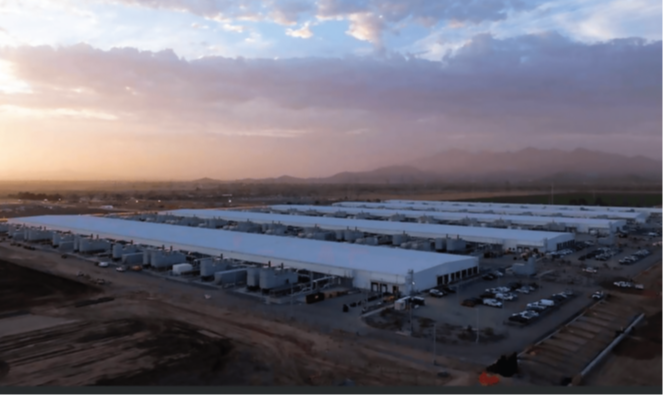
The Chevron-Microsoft data center partnership known as Project Kilby should bear some similarities to this facility in Pecos. Chevron has signed a 20-year deal with Microsoft to build the center’s power facility and supply the natural gas.
Why There’s an Issue

James Wicklund
Two 2026 headlines from the U.S. Energy Information Administration (EIA) are particularly telling. As noted in June’s PBOG here: tinyurl.com/5n8skdtr.) the EIA reported that Permian gas production increased by 60 percent in the 2021-2025 time frame, much more than the 37 percent increase in oil production. This is no surprise to anyone in the industry.
And a June 2024 story about gas production being at risk due to lack of takeaway capacity explains that the increase was overwhelming the existing takeaway capacity to the extent that gas production—and even what we might now call “associated oil” production—were at risk if new capacity didn’t come online.
The gasification of Permian oil is due to physics, which means it will continue as the region continues to mature. Wicklund explained, “Due to the aging of reservoirs, water and associated natural gas production will continue to grow at a faster rate than growth in oil production and can grow, even if oil production drops.
“We are building pipes as fast as possible but until Enbridge and others get interconnects to take Permian gas east of Houston, there are limited pipe endpoints. That is why Waha has been negative for half of the last 18 months.”

East Daley Analytics created this map of pipelines being built through 2030.
The Struggle is Real
At one time, passengers on any nighttime flight approaching Midland International Air and Space Port could spot hundreds of yellow flaring flames, illuminating the landscape like a centenarian’s birthday cake. In fact, in 2018, Bloomberg reported that every day Texas flared enough natural gas to generate electricity for every house in the state.
Slight improvements began around 2018, when bitcoin miners realized that there was also enough flaring going on to power a whole lot of bitcoin mining—and that by paying a small behind-the-meter fee for the gas they could solve issues for themselves, the producers, and the environment.

Steve Reese
Flaring was further pressured beginning in 2021 with tighter EPA regulations on it and on methane emissions.
Bitcoin mining opened the door to much more outside-the-box and behind-the-meter thinking. In another marriage of necessity, the meteoric rise of data centers with their massive demands for electricity and water—and the standard grid’s inability to keep up without raising electricity rates for the general populace—led to data centers nabbing produced gas and water in greater numbers.
A significant case in point is the recent announcement of Chevron and Microsoft’s Kilby project. In that scenario, Chevron would provide field gas right in Waha’s back yard, to generate 2.67-gigawatts for a planned Microsoft data center.
Using field gas to power oil and gas operations themselves is also a growing option. On that note is the July-announced alliance between SLB and Liberty Energy, Inc. The press release states, “The planned alliance will combine SLB’s modular data center infrastructure solutions and project execution expertise with Liberty’s modular power generation and intelligent behind-the-meter power management capabilities to support growing demand for AI and high-performance computing infrastructure.”
And in answer to a follow up question, a public relations person noted that some of the sites receiving equipment will use behind-the-meter power, but the exact power configuration will vary by customer and project.
Liberty, Caterpillar (see the June story mentioned above), and other service companies have begun offering extensive options for gas-fired generation onsite in recent years.
How Much Gas Can a Data Center Use?

Jack Weixel
Will alternative options use enough natural gas to make a difference in Waha prices and takeaway shortfalls?
They may help some, at least. Said Weixel, “The Chevron-Microsoft partnership will suck about 350-410 MMcf/d of gas supply…. In Texas as a whole, we see about 3.4 Bcf/d total of new gas demand due to proposed data centers and hyperscalers.”
Wicklund also sees some benefit. “Yes, it will help Waha. Any help helps but enough gigawatts and you burn some gas.”
And Reese said that although estimating behind-the-meter (BTM) use is somewhat of a challenge, there are indeed benefits. “There can be a way to estimate BTM uses based on power actually produced, assuming no other generation (like small scale nuclear / wind / solar) being used.
“Two positives for data centers are their ability to begin using produced water for cooling and flared gas for generation, based of course on logistics and metrics. I believe if facilitated correctly, and with the proper consideration of the public interests, this can be significant on many levels.”
More Pipelines Will Help—for Now
In a May 26 Today in Energy release (tinyurl.com/pdetdwwb), the EIA also said it feels that natural gas pipelines currently in planning and construction will “debottleneck” the takeaway issues by 2027.
It said, “The projects in Texas will provide additional takeaway capacity out of the Permian Basin and debottleneck the Waha Hub, supplying natural gas to LNG export terminals, as well as residential, power, and industrial users.”
Is that true? The panel of experts mostly agreed that it will—but for how long?
Too Much of a Good Thing?
 One irony is that the rise of data centers and liquefied natural gas (LNG) exports, along with significant upcoming new pipelines, the latter as noted by the EIA, could flip this equation sooner than later.
Or will it? Scenarios vary, but for the short term it’s unanimously positive.
Weixel: “There is certainly an excess of natural gas capacity coming online out of Waha. If you add it all up through [the end of] 2030 you get to about 11.3 Bcf/d of new capacity. Our estimate is for about 6.5 Bcf/d of incremental associated gas production in that same time period, so you will have capacity to spare.”
At least for a while, this will be good news for sellers. For at least a while, “Waha finds price relief, basis closes within 70-80 cents of Henry, and those spreads to the Midwest get squeezed. The new capacity gets you to Aqua Dulce, Arizona, and the Houston Ship Channel/Katy, where both transport costs and spreads are better” than at Waha.
With just those quotes Weixel seems to differ from Reese and Wicklund. But hold on.
Wicklund: “Projections are that we need to go from the current 100 Bcf/d now to 125-130 Bcf/d by 2030. It will not be linear. We don’t have the pipes, turbines, or transformers in place yet so I don’t need the gas yet. That lag exacerbates the problem. We will be producing more associated gas before we need it.”
Reese: “This may at least fill some of the curve, but future demand has a chance to be on the upswing based upon what we are seeing as a large tug-of-war between data center and LNG export demand. Our LNG firm in Berlin, American Gas Partners, has confirmed German and Polish industrials and municipalities are enamored with U.S. shale gas. I feel much of Western Europe feels the same way.
In the big picture, Weixel has concerns about capacity excesses holding up as well. “The most incremental associated gas you can produce in the basin through 2030 is about 8.0 Bcf/d. Beyond that your crude egress capacity to Corpus, Houston, and Conway is maxed out. We’re already seeing these crude pipes running full, so this would include any expansions on the Cactus systems and Gray Oak.”
As Reese stated, LNG is becoming a significant pull for Permian gas, if the gas can get to liquefaction facilities on the Gulf Coast. He added, “A huge key on the horizon is a dual demand pull from Data Centers and LNG, sometimes competing for the same molecules. I’m mildly bearish unless the next election goes left and renewables take center stage again.”
The irony continues that while demand for U.S. natural gas is growing domestically and globally, Permian producers without a long-term contract are paying to offload something that is at a premium everywhere else.

Paul Wiseman
Paul Wiseman writes in the oil and gas sector. His email address is fittoprint414@gmail.com.