









Click here to listen to the Audio version of this story!
Grids nationwide and in the Permian Basin are strained, pulled at from every direction. Industry and transportation (electric vehicle charging stations) are a significant growth challenge. And in the wide-open spaces of West Texas and southeastern New Mexico, unspooling wire for hundreds of miles to a drilling operation is spotty.
Then there are data centers. While they’re far from alone in stretching the grid, their explosive growth is making headlines.
Two portable power providers in the Permian, Gravity Oilfield Services and Liberty Power Innovations, are working in two directions. They’re focusing on their separate niches in oilfield generation—and they’re looking to reach out to the increasing number of data centers that are looking to tap into the huge power options offered by natural gas in the Permian Basin.
Gravity Pulls Toward Oil and Gas

Chad Wolf
In today’s energy market, so many companies are jumping at new opportunities that, sometimes, their original market gets left behind. Those that stay steady stand to profit from that.
This is what Chad Wolf, Gravity’s Vice President, Power and Rental Operations, sees. “We have developed and have extensive experience with the gas reciprocating engines in generators with the ability to parallel many of them together to fit a variety of needs,” Wolf said. Gas reciprocating engines in generators contain pistons instead of a turbine.
He continued, “What we see is there are companies chasing after the turbines, batteries, and the hybrids toward adjacent markets, which is leaving a void in the oil and gas market that we continue to be able to fulfill.”
Wolf explained the dilemma by comparing it to running power to an office. “When you build brick and mortar, lay a foundation, they see that as a long-term end-use customer, whereas the wellhead is temporary in power demand, because the power requirements change so drastically over the well’s life. As the decline curve of wells continues to progress, the power requirements will have the same sort of decline curve, necessitating a flexible power solution.”
BYOP (Bring Your Own Power)
Wolf says portable, flexible power fills this gap. “Oil and gas producers are having to supply their own power. We see customers that are centralizing their power with large installations of power from generators to feed multiple sites and manage their own grid.”
The benefit is clear, Wolf noted. “As production slows, the need for power [diminishes] in those wells. Using portable generation, or site generation as we refer to it, the power supply through the use of our generator fleet with piston engines is able to decline with that decline curve in the well.”
Scale It as Needed
With customers ranging from the majors to those with only a few wells, portable power is a perfect solution. Customers are able to obtain a power supply in the exact amounts needed on the schedule they require.
Said Wolf, “We have the ability to parallel generators together or scale them down to a smaller generator solution as time goes on, whereas the larger operators have the ability to centrally locate the power with parallel generators, distribute the power where it needs to go, and scale within that system.”
As to what stage of the well this power may be used, Wolf said he always tells customers, “We have products that fit from spud to plug.”
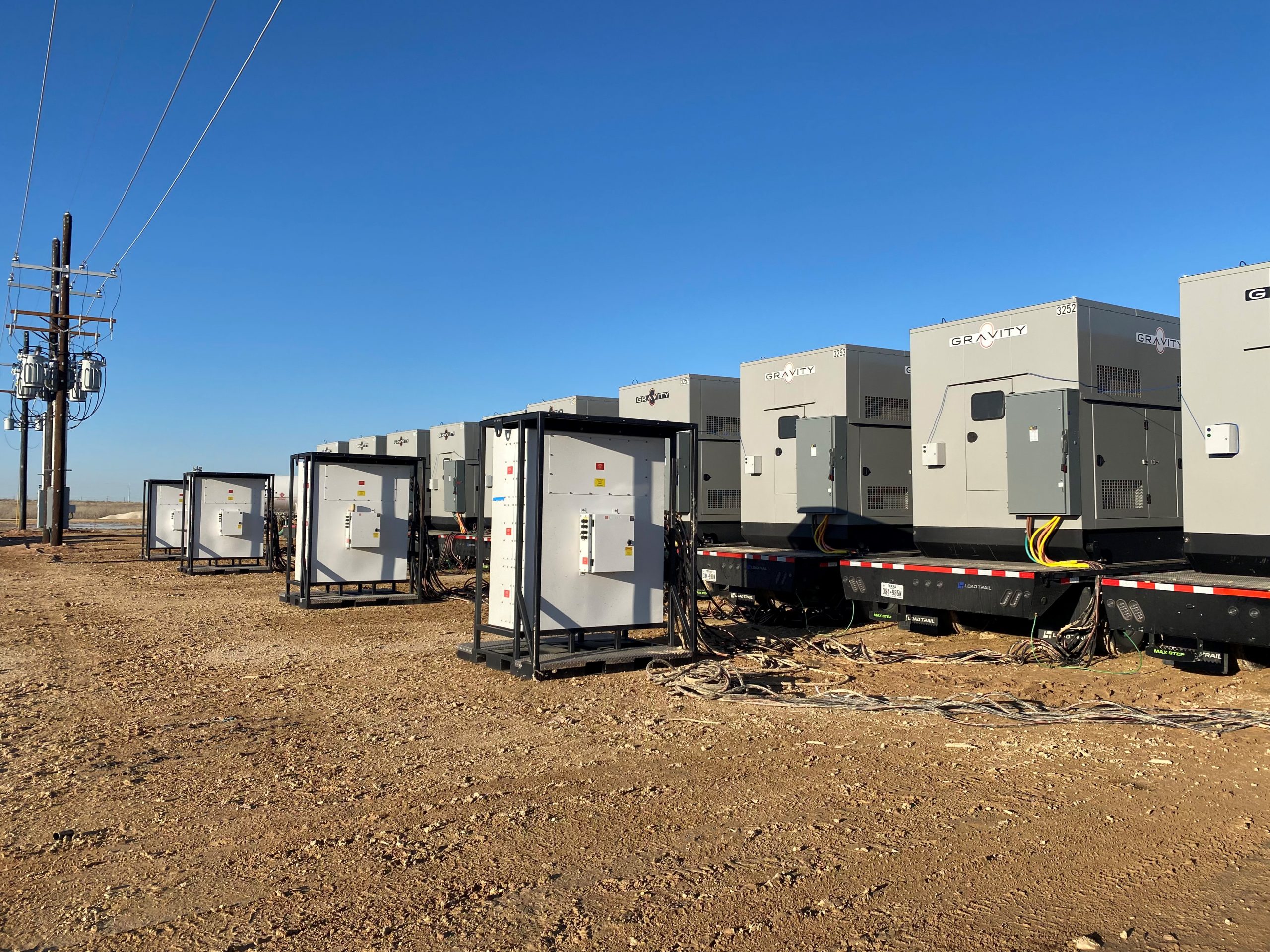
Gravity’s natural gas generators have been deployed to energize a microgrid to feed multiple locations in the Permian Basin.
Data Centers on the Horizon
The explosive growth of data centers requiring portable power is a future market for Gravity. When asked if Gravity could supply power to a data center, he said, “Yes, we can provide power to a data center. We would provide permanent in-place power as opposed to mobile power as we have been used to. But we see data centers as a growth opportunity for our business in the future.”
Liberty Power Innovations

Richard Bradsby
Gravity is not the only portable power provider who’s focusing on a niche, yet at the same time eyeing the data center future. Richard Bradsby, Senior VP of Power Generation and Fuel Services for Liberty Power Innovations, said LPI currently has a clear focus on larger jobs.
“Our best fit is probably [a location] that needs greater than five megawatts of load for some duration,” he said, suggesting a number that could grow larger—up to 10-15 MW. As a result, “We’re seeing demand for that and participating in processes to respond to those demands.”
All this is in response to the aforementioned grid challenges faced by Permian producers. Widely varying power needs, from multiple megawatts for frac jobs, then dropping to a few kilowatts for electric submersible pumps (ESPs) as production decline curves kick in, make utilities often shy away from installing power to fracturing operations.
Bradsby said LPI entered the portable power marketplace to provide electricity for fracturing needs, replacing the need for costly and emissions-thick diesel power or, in some cases, propane. The latter burns cleaner but still must be trucked to the site, and transportation is a significant part of the extra cost.
With the evolution to assembly-line-level simulfracs, “We’re seeing where we might have over 50 MW of generation on a single pad.” That phase requires “Quite a bit of generation equipment.”
But for the next phase of the well, that much power is serious overkill. “That equipment is not the best size for what producers need to run ESPs and well pads. It’s a little too big. Especially if you’re going to have redundancy. We use equipment that produces about 2-1/2 megawatts per machine, and ESPs only need about 400 KW.”
So, Bradsby said, they have mostly left the smaller space to others. But when producers want to build their own microgrids, the opportunity is perfect. “Then we can centralize generation with units like ours that make a lot more sense. And we are working on those projects and implementing solutions like that.”
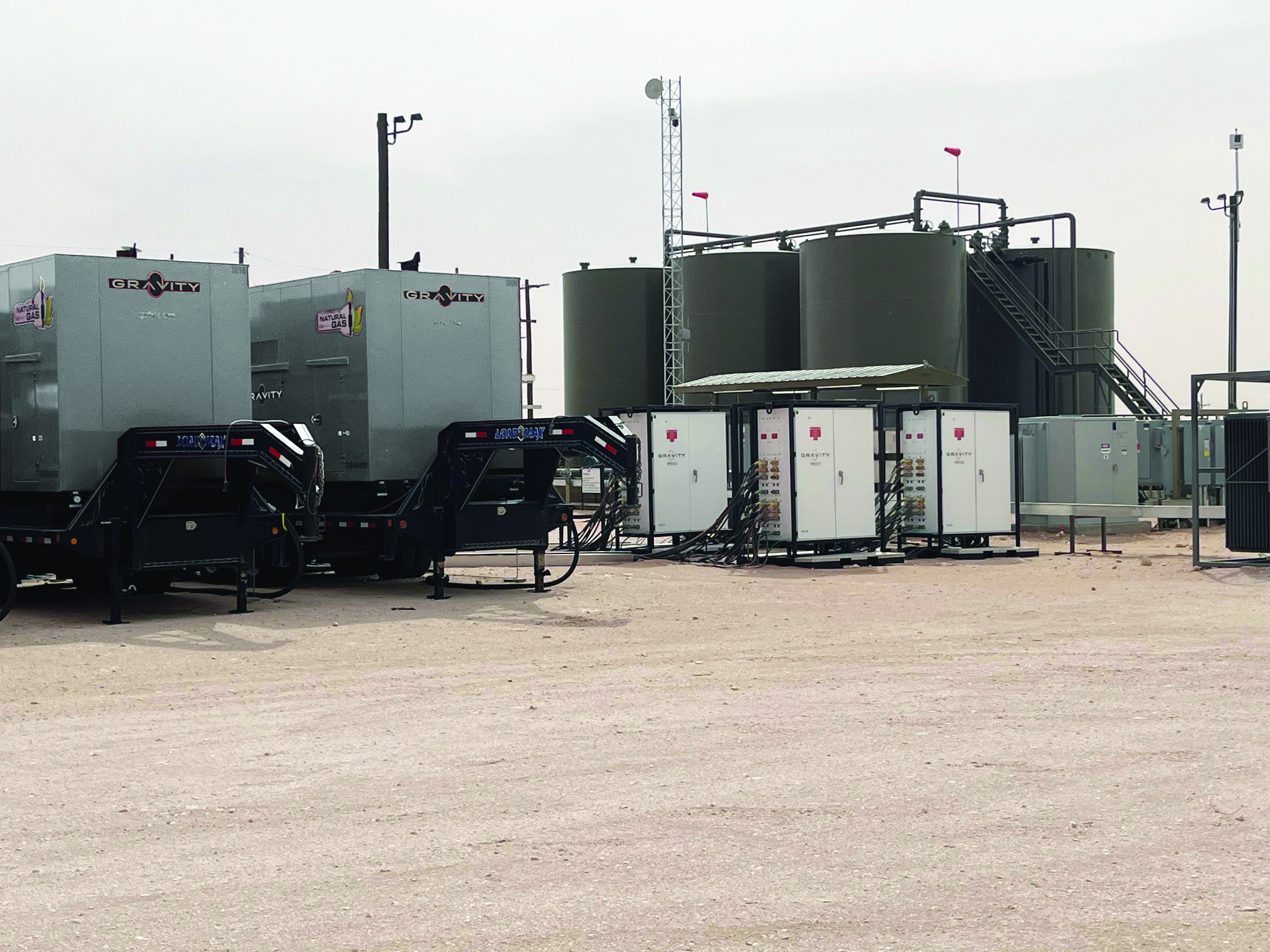
Gravity provides temporary, emergency, and supplemental power solutions for mission-critical facilities.
Midstream and “Energy as a Service”
In the midstream space, pushing product along pipelines requires electric horsepower as well.
“There could be some momentum to go into more directly driven gas compression for midstream processing plants. We’re responding to demand in that area, too, where those might need a range of, say, 35 to 70 megawatts. And the grid is multiple years away from being able to serve that load,” he said.
It seems the power demand from data centers is on the tips of tongues everywhere. To that end, Liberty and Vantage Data Centers recently announced “a strategic partnership to develop and deliver utility scale, high efficiency power solutions for Vantage’s expanding portfolio in North America.” The power solutions, once commissioned, will be owned and operated by LSI. That’s from a press release provided by Liberty. Vantage is a global provider of hyperscale data center campuses.
“Under the agreement,” the press release continues, “Vantage and LPI will partner to deliver up to one gigawatt [1GW] of power agreements between LPI and end-users of Vantage’s data centers within the next five years, including a reservation of 400 megawatts [MW] of 2027 power generation capacity, as well as future expansion potential beyond 1GW.”
Several situations are pushing this and one, said Bradsby, is that the grid was already strained before data centers began multiplying.
He explained, “From our perspective, the dispatchable solutions help provide an answer. And for the appropriate commercial arrangement, we can compete well with grid prices for very short-term services, without the length of a term of a commitment. “Our model is to offer energy as a service.”
That energy will in most cases be generated by natural gas somewhere nearby. Bradsby pointed out that data centers rarely rely on gas from one well or field for power generation, needing instead to “de-risk” the operation by accessing a pipeline. Even there, he said, for a data center located in the Permian, it reduces costs by shortening the distance the gas travels and opens up the longer sections to transport more gas to distant locations.
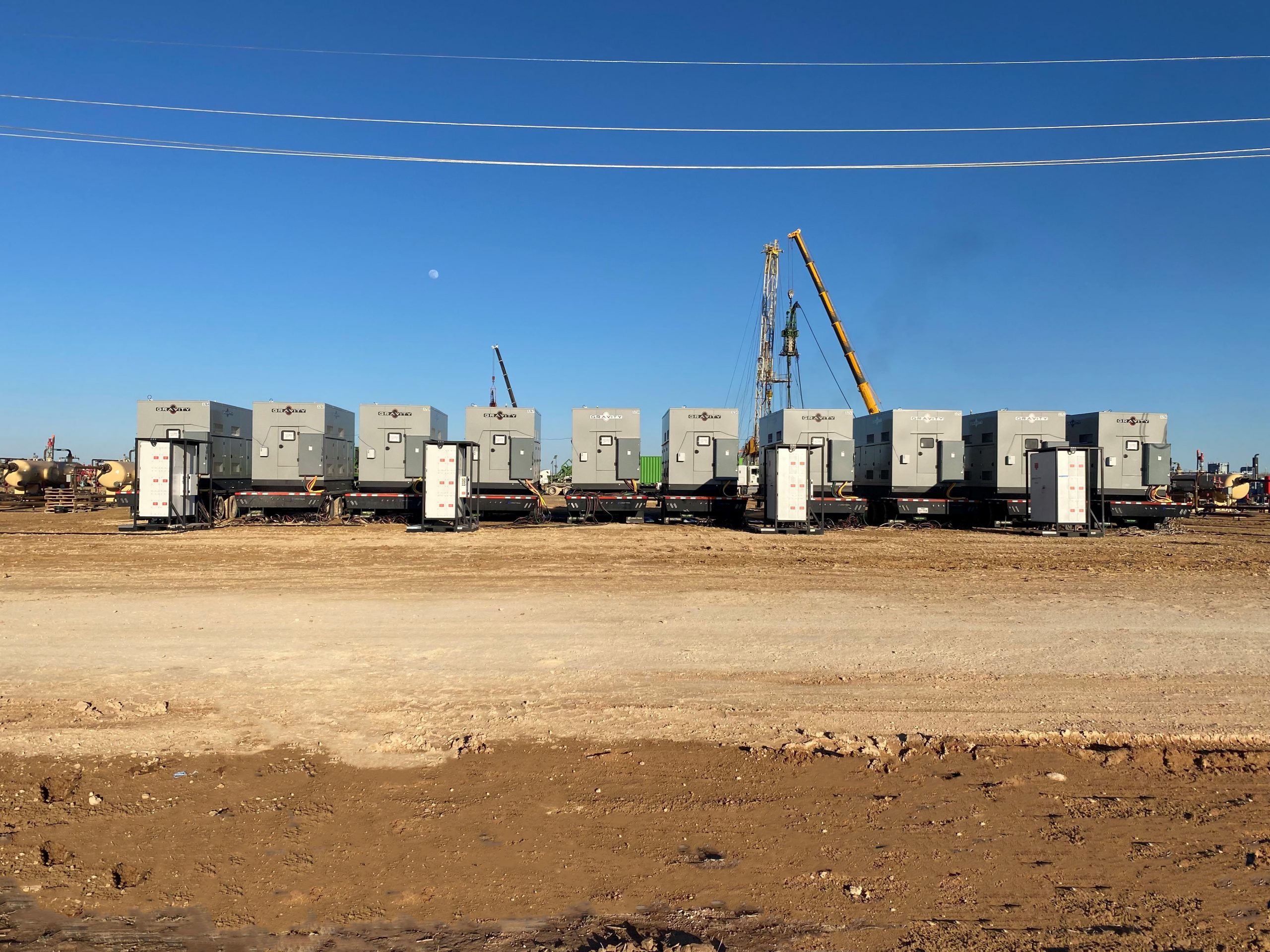
Gravity’s Chad Wolf says, “Oil and gas producers are having to provide their own power. We see customers that are centralizing their power with large installations of power from generators to feed multiple sites and manage their own grid.”
Portable Power Gets Its Own Conference
Beyond the traditional big oil and gas conferences, there are now focused ones for produced water, enhanced oil recovery, and now, the “Permian Power Conference,” which held its inaugural session last fall, said Bradsby.
“The Permian Basin as a whole, [is] wanting to attract some of the demand from the digital world. Some of that has been realized,” he said.
To the old adage that “Knowledge is power,” the massive computer centers that host and access data, while using thousands of megawatts to operate, can flip that statement.
To them, “Power is knowledge.”

Paul Wiseman
Paul Wiseman is a longtime writer in the energy industry.
Leave a Reply