









It should surprise no one that this year’s UTPB Energy in Water Conference was the most well attended yet. Brian Ward of APATEQ observes, “There is no comparison to the expert discussions, the tremendous networking opportunities, and the hospitality is second-to-none.”
Indeed. Robust panels of deeply committed and insightful professionals discussed the entire oil and gas zeitgeist of the Permian Basin in this compelling two-day event that ran April 8-9 at the Bush Convention Center in Midland, Texas.
Every major facet of the Permian Basin’s water future was addressed, from the socio-economic impact that nuclear power brings to the education and workforce needed for the future technology-driven oil patch. The outsized impact of this conference is how it addresses the intersection of the latest tech and systems from the industry with the real-world communities that they serve, and how those systems are designed to deal with today’s, and tomorrow’s, oilfield water challenges and opportunities.
Rick McCurdy, VP of Technology at Select Water Solutions, sums it up this way: “We’ve confirmed the data centers are coming, and we’re addressing the re-balanced needs for water. These continued conversations are important to the growth of the Permian Basin.”
Something emerged during the proceedings that, while not explicit, did at least implicitly signal a shift, or an inflection point, in the ongoing water trajectory.

During the sessions, at any one point, you could move from a panel on produced water reuse to a discussion on data centers, then into the session on workforce development, and it would feel like you had changed topics entirely. Different speakers, different companies, different problems. Sit with the thought for long enough, though, and something else starts to come into focus, not that the industry is trying to build a “produced water system,” but that parts of it already have.
More specifically, certain parts of it are becoming harder to work around.
The conference itself reflects that shift. Hosted by the University of Texas Permian Basin, with support from the John Ben Shepperd Public Leadership Institute, the Water in Energy event has grown into one of the more meaningful convenings in the region. This year a turnout of more than 600 registrants underscored the importance of the event. What began as a focused discussion around oilfield water has expanded alongside the system it serves, now pulling in perspectives from across energy, infrastructure, policy, and emerging industries. Indeed, more than 60 speakers took the stage, in addresses and panels, highlighting how intricate the system now is. As the system has grown, so has the need to understand how its parts interact, not just individually, but collectively.
Just as notable at the event itself is the role students play in that environment. UTPB has intentionally created a bridge between the classroom and the field, giving students direct access to the professionals building these systems in real time. The result is, “…not just a conference, but a conduit, one where education, workforce development, and industry are interacting in the same room, at the same moment,” said Shelby Landgraf, Executive Director of the Water In Energy Conference at UTPB. In a region where labor shortages continue to constrain growth, that connection is not a side benefit. It is part of the system’s long-term viability.
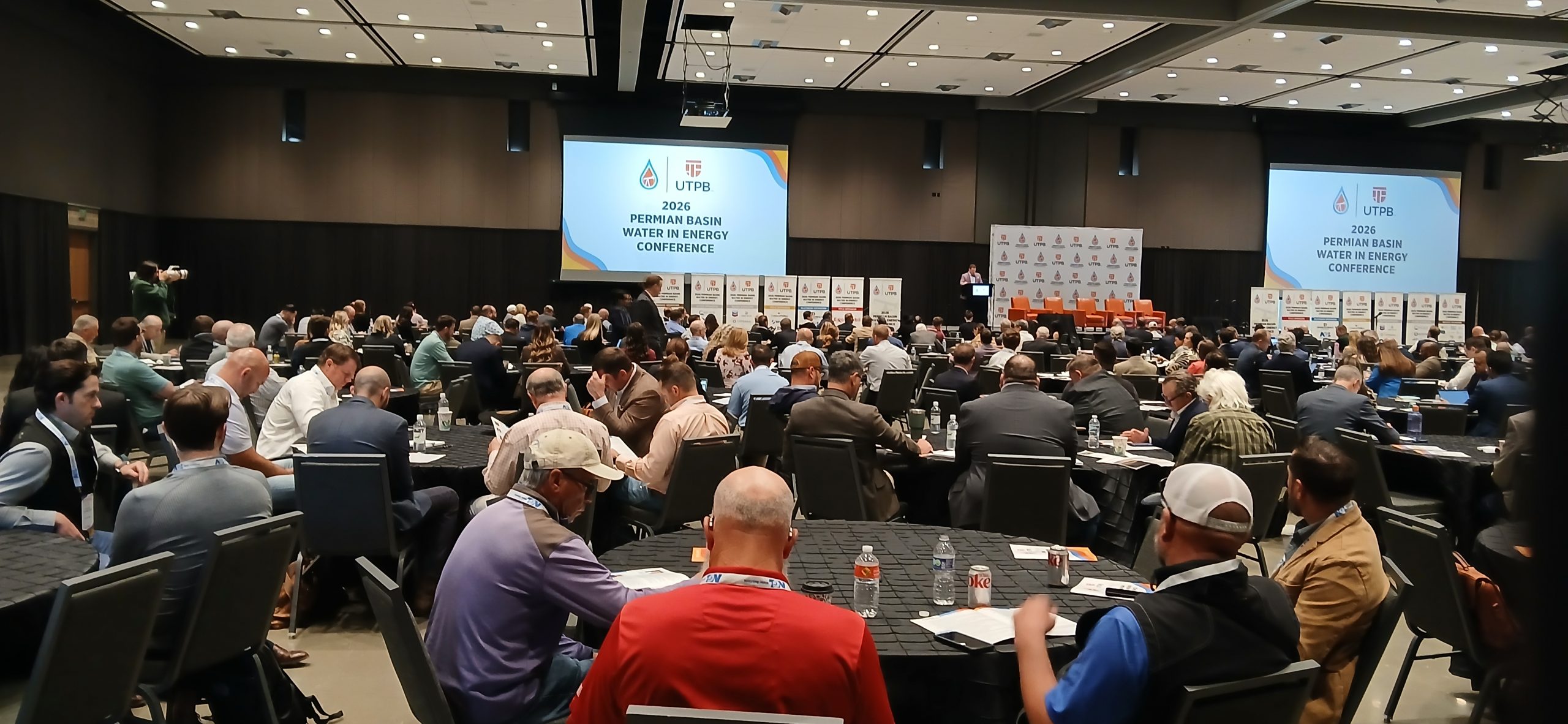
On paper, the agenda read like a survey of moving parts: produced water and reuse, infrastructure buildout, policy and regulatory direction, workforce, and education, as well as emerging technologies, including nuclear, and new demand drivers from manufacturing to data centers. Individually, each session stayed in its lane. Across sessions, however, the same pressure points kept surfacing under different names.
In produced water discussions, disposal is no longer the quiet default; volumes, costs, and scrutiny are pushing reuse into a central role. In infrastructure panels, the limits of trucking and fragmented logistics were hard to ignore, and as scale increases, permanence starts to win. Workforce conversations pointed to a labor pool that is not expanding fast enough to match the system’s growing complexity, forcing companies to think differently about efficiency and integration. Policy sessions, while lacking a single unified strategy, made one direction clear: expectations are tightening, and inconsistency is getting more expensive.
Each of these pressures does something subtle but important. It reduces optionality.
What once could be handled through workarounds now requires commitment. What could once be bypassed now has to be engaged. Across different parts of the system, the same pattern is emerging: certain solutions are no longer simply available, they are becoming unavoidable.
At the center of that shift was a recognition voiced plainly by Ashley Kegley-Whitehead of Infinity Water Solutions: “There’s a real shift happening. Water is no longer a background issue, it is central to growth, energy, and economic development.” That shift showed up everywhere, whether the topic was reuse, infrastructure, or new demand. Brian Ward of APATEQ emphasized the value of bringing those perspectives together, noting, “There is no comparison to the expert discussions [and] the tremendous networking opportunities. And the hospitality here is second-to-none.”
Across presentations, solutions were abundant, but they were not being discussed in isolation. During his session, Nick Morris of Natura Resources framed one part of the equation succinctly: “Let the experts treat the water; Natura will help lower the cost.” That framing reflects a broader shift toward specialization within a system that is too complex for any one player to fully control. Meanwhile, Rick McCurdy of Select Water Solutions pointed to what is already entering the system: “We’ve confirmed the data centers are coming, and we’re addressing the re balanced needs for water. These are critical conversations for the Permian Basin.”
Individually, these are observations. Together, they point to something structural.
Kegley Whitehead added another layer: “[A] common thread was urgency, but also a recognition that coordination is what unlocks progress.” Coordination came up repeatedly, but in the Permian Basin, coordination does not arrive as a plan. There is no central operator, no system wide dispatcher like ERCOT managing electricity flows behind the scenes. What exists instead is a set of constraints, tightening at the same time, and under that kind of pressure, systems do not wait to be coordinated. They begin to organize.
That organization does not happen evenly. It shows up first in places where inefficiency can no longer be tolerated. You could see it across the agenda: reuse infrastructure that multiple operators are beginning to depend on, pipeline networks where alternatives become uneconomic at scale, treatment systems embedded deeply enough that they are no longer optional, and increasingly, the connective layers—data, logistics, coordination—that allow everything else to function.
This last category is easy to overlook, but it may be one of the most important. As systems grow more interconnected, the value shifts toward the layers that enable coordination between otherwise separate operations. Data visibility, logistics optimization, and system integration begin to carry weight alongside physical infrastructure. These are not replacements for pipelines or treatment facilities. These are what allow those assets to operate as a cohesive system. As those pieces settle into place, they stop being choices and begin to act as requirements.
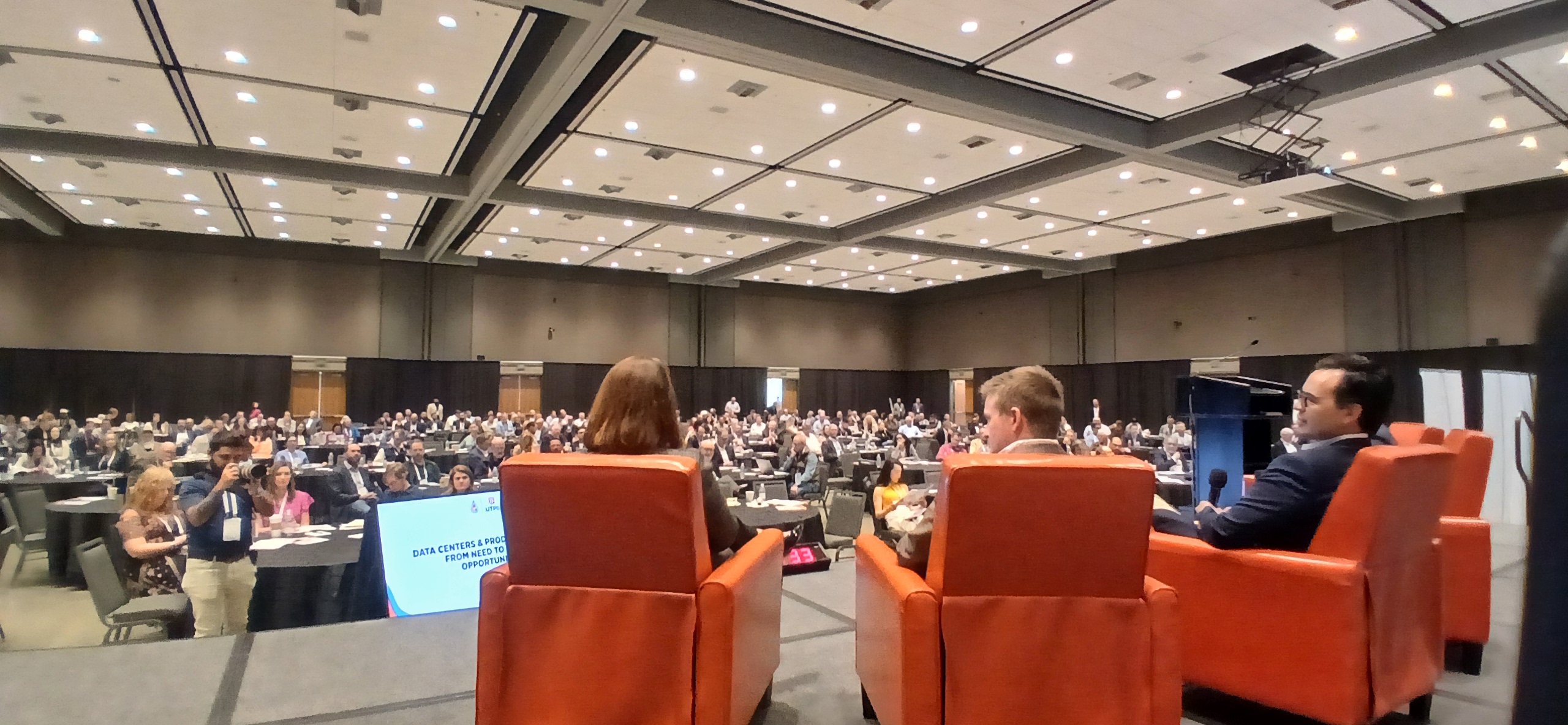
In a system without a central orchestrator, advantage does not come from controlling everything. It comes from becoming unavoidable.
As costs rise, whether from labor shortages, infrastructure demands, or regulatory pressure, the ability to work around certain parts of the system starts to disappear. Avoidance becomes its own cost center, and once that threshold is crossed, the system begins to lock in around the pieces that remain. This system is not being coordinated. It is being cornered into coherence.
This is not just a future state. Kegley Whitehead made that clear: “By 2027, the question won’t be ‘What are we planning?’ It will be ‘What have we built?’” That statement reflects a reality already taking shape. Enough infrastructure is in place, enough capital has been deployed, and enough systems are interacting that, in certain parts of the Permian, the unavoidable layer is not emerging, it is already producing returns.
As Jesse Dominguez of Mersino Water Solutions put it, “At the end of the day, this business still runs on execution. You can have the best technology and the best strategy in the room, but if you cannot move water reliably, none of it matters.” Execution remains the baseline, but as systems scale, coordination layers, data, logistics, and integration,become just as critical. They do not replace infrastructure—they make it function as a system.
By the end of the conference, nothing had been formally announced. No single roadmap. No unified strategy. Across panels that appeared unrelated, however, the same pattern kept surfacing: the system is getting harder to operate in isolation. In a region where no one owns the system, that may be the closest thing to coordination there is.
By the time the industry returns for the next iteration of the conference in 2027, the conversation will likely sound different. Less about what could be done, more about what already is. Because once parts of a system become unavoidable, they do not revert. They compound, and in doing so, begin to define everything built around them.
Much like owning the only Allsup’s in Notrees, the Permian Basin rewards the player that cannot be bypassed, delivering a critical service, steady demand, and strong returns. Whether at the level of the industry, the company, or the individual, the outcome is the same: we become integral parts of a system that is unavoidable.

Christian Lombardini
Christian Lombardini, a former field operator and manager, is now a communications and content consultant for oil & gas companies and creators. You can find Christian and his The Oilfield Leader Podcast on LinkedIn.