









In some ways minerals and land people have less availability of AI and massive databases than their coworkers in geology and engineering. That’s because engineers and geologists lean on extensive internal and external monitoring systems to gather their data, which can then be examined and used by AI for automation and for human input.
For landmen, much of their information involves outside data from counties and agencies, some of which are still stuffing papers into file cabinets.
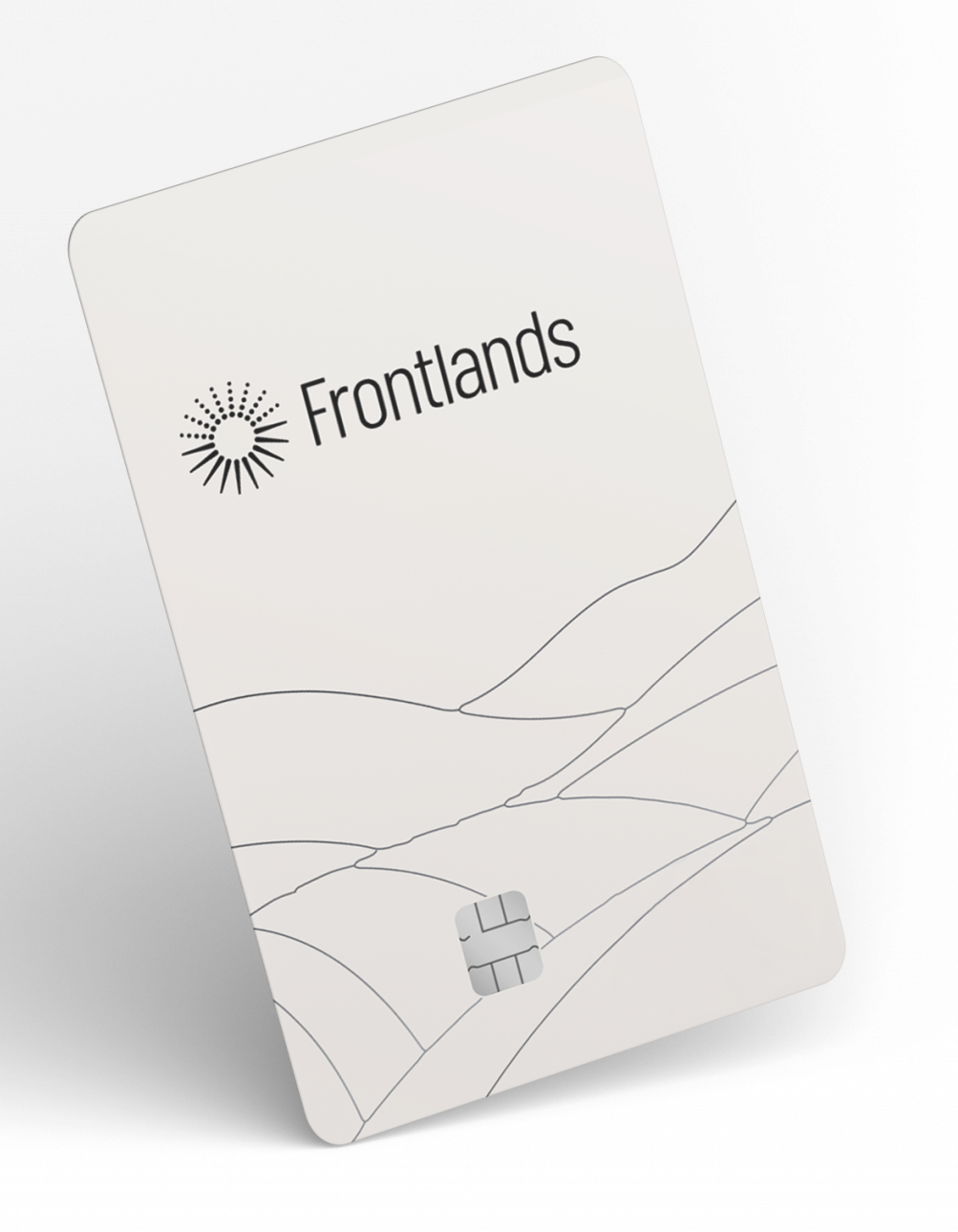
Still, AI is in the future, and some AI-reliant creativity is certainly in the works, as one company is releasing a minerals-based credit card this summer.
Jumping from Big Chief to Big Data

Hunter Aycock
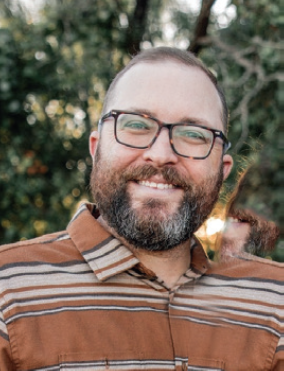
Hunter Aycock, In-House Petroleum Landman for Clear Fork Oil and Gas, says he’s right in the middle of the data transition in land. He’s old enough to have been trained by a veteran landman with a Big Chief tablet at the county courthouse, and young enough to see and appreciate the AI future clearly.
AI is currently best used in the office for summarizing and comparing two versions of a contract. “It’s a very good tool to compare and contrast different contracts to highlight the differences to help speed things up in that regard,” he said, with a caution. “But you still want to read through that contract.”
Using AI outside the office is still a work in progress for landmen, Aycock said, because not all the external data is digitized. Aycock estimates that, in that regard, he can only use AI about 10-15 percent of the time.
Whereas geologists and engineers can subscribe to well information databases from institutions like the Texas Railroad Commission, IHS, Enverus, and others, land work is less digitized.
On the land side, the future is—still the future. “I think we’re going to see some acceleration in that over the next three to five years for sure,” Aycock said. Now, however, a lot of Clear Fork’s prospects in the Permian’s Eastern Shelf are in “more rural counties, [where] their records aren’t digitized going back to sovereignty,” he said. Lacking a database, AI is not a useful tool.
Aycock’s AI and online options currently revolve around finding who owns surface or minerals, using Lexis Nexis. “They’re going to give me the most general information, potentially contact or cell phone numbers to the people that I’m trying to locate,” he said.
“From there, I’m still cold calling, knocking on doors, sending out letters. The biggest challenge is with so many robocalls and spam calls that take place, we have to get past the step that I’m legitimate.” Battling robocalls is one area where AI is mostly a hindrance.
Then there are letters, emails, and personal visits, “…sitting down at the table, sitting across the desk from an attorney, you name it. All those traditional forms of communication are taking place to close the deal for a lease.”
Buying or Leasing?
Clear Fork’s job for Aycock is mostly leasing, rarely involving buying minerals, he said. “Nine times out of ten, I am attempting to contact and establish relationship with the party so that we can lease them for oil and gas exploration. There are other times where I’m contacting a person who already owns those rights and we want to either farm out or purchase those rights from them.”
Mostly he deals with individuals who own both the minerals and the surface, especially as the company focuses on less-produced Eastern Shelf acreage.
Having grown up in Sterling City, Aycock says he’s very comfortable at that kitchen table, listening to the concerns of people being approached about their minerals for the first time.
“I can understand and relate and share those concerns. Their main livelihood is the crops that they’re growing or the livestock that they’re raising. I can help work through those issues and concerns with some of that background in mind, which has become an asset.”
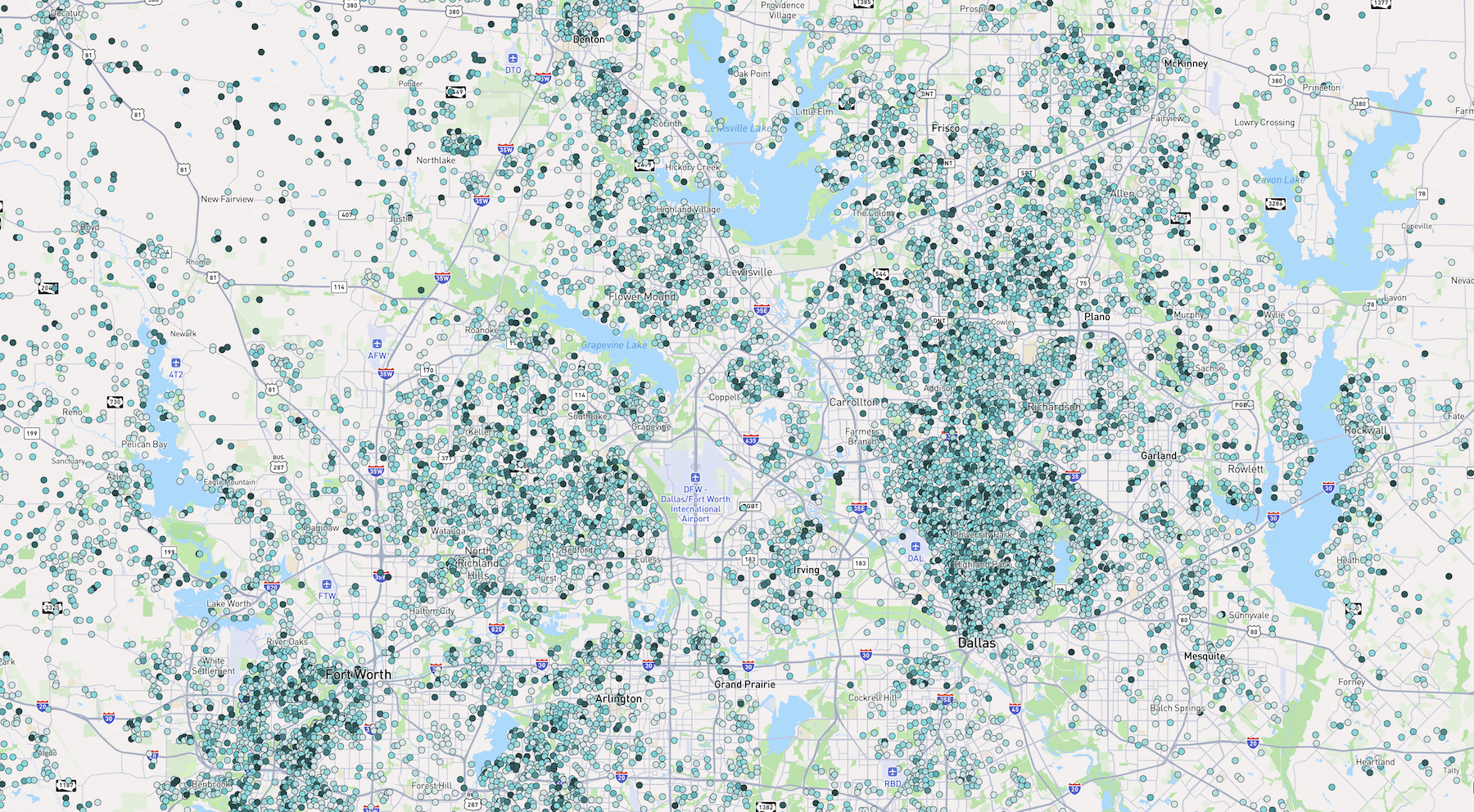
They’re everywhere. Here we see a mineral rights owner map of the DFW region.
Sometimes that ability to listen and ask questions can avert a significant safety hazard. He related that a cotton farmer had concerns about the company running above-ground three-phase power lines to their well site on his land. The farmer said above-ground lines would be totally out of the question, to which Aycock responded that burying the lines would be much more costly for Clear Fork.
“And he said, ‘You don’t understand, because with this equipment, when we are harvesting this cotton, it generates a lot of static electricity.’ And he said, ‘It can make it to those lines.’” Aycock was at first incredulous, but the farmer told him, “I know people who have passed away from it.”
All of that was news to Aycock, and without meeting the man face-to-face “I would never have known or realized” the danger.
AI will probably not ever be doing that part.
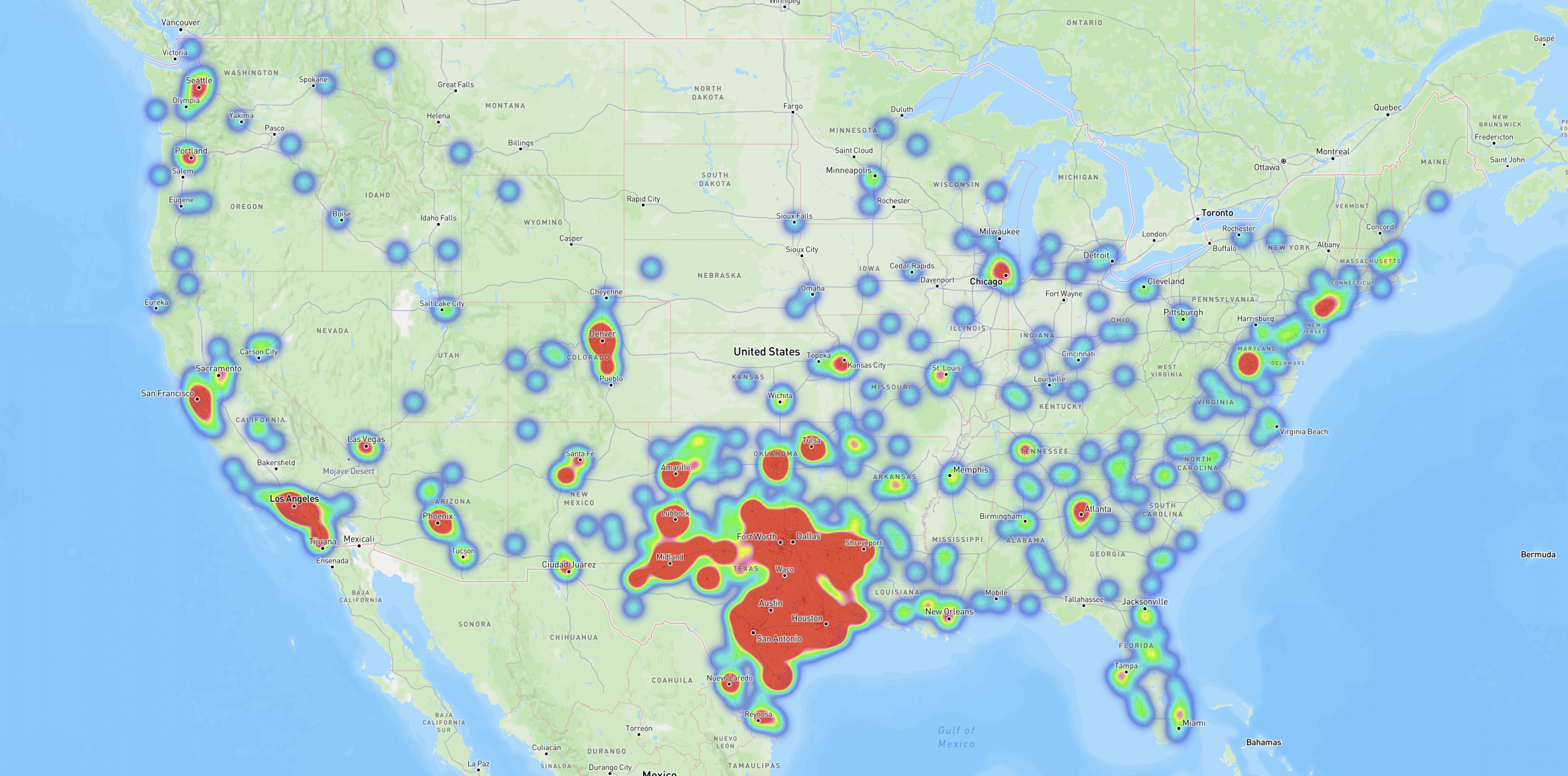
This is a heat map of mineral rights owner concentration in the United States.
The Future of AI and Land
While the sun is setting on the day of the Big Chief tablets, it’s not completely done yet, as rural counties wrestle with modernizing their databases. But, says Aycock, “The reality is we have to accept that technology is always advancing. AI is here and it’s a part of our lives for better or for worse.”
The “better” could be enhanced by appropriate regulations, he added, but, “Like anything, it’s a tool, and we can use that tool for the greater good, or we can use it to our detriment.”
Next, we will hear from a company that’s looking to minerals and AI for the greater credit good.
Frontlands Offers Minerals-based Credit Card

Brandon Cotter
“You’ve got all these assets stuck in the ground and most people really don’t want to sell because they’ve been in their family, often for generations. But sometimes things come up.”
That’s what Frontlands Founder and CEO Brandon Cotter heard in a conversation with a friend who is a semi-retired minerals buyer. The friend continued, “I’ve got a guy that comes in every year and sells me one-tenth of his mineral rights because he needs cash for taxes or this or that and he doesn’t really want to sell. So, he sells the smallest chunk he can sell to cover his needs.”
So, Cotter mused, what if there were a simple and dependable way to cover some expenses by borrowing against those assets, instead of selling them?
A confessed “serial entrepreneur,” Cotter had learned much from starting several businesses, one of which he’d sold to Mark Cuban’s broadcast.com. This time he wanted to start a credit card company that would offer lower interest rates by securing the balance with mineral rights as collateral.
Can You Talk Me Out of This?
After consulting with experts and asking them to talk him out of it if the idea was bad—and it wasn’t—Cotter worked with a friend, Brian Hamilton, a fintech expert, to get some investors. They started by offering just a line of credit based on minerals, without a credit card. “We raised a couple million dollars in 2024 and were live in about 90 days,” he said. That money came from what he described as “a traditional Silicon Valley venture capital” entity.
For that trial, “The response has just been really, really favorable,” Cotter said, adding that they raised an additional $2 million in 2025.
The plan is for the credit card to debut in June, about the time this story is released. For that, “they secured a $50 million credit facility, on top of a previously raised $5.5 million in equity,” according to their press release.
“The financing includes $5.5 million in equity funding from venture investors, including Cambrian, FiatVentures, Wischoff Ventures, and Lime Rock Partners—along with a $50 million credit facility from StarMesa Capital,” said the release.
 So What’s the Big Deal?
Several questions arise, including how this differs from other cards, how does the mineral rights collateral work, among others.
Cotter noted that the interest rate for unsecured credit cards hovers around 25%, whereas home equity loan rates are closer to 10 percent—and he wanted Frontlands’ card to land somewhere in between. While all interest rates vary, including this one, he estimates it will start around 16 percent.
How Do Mineral Rights Work as Collateral?
All through this part Cotter stressed that “We’re trying to be as borrower-friendly as we can be.”
Underwriting begins with the applicant giving Frontlands paperwork proof of their minerals. That can include a revenue statement or a check stub. “That gives us information about their wells and their decimal interest,” he said. From there they run title to verify.
There’s also a soft pull of the potential user’s credit to evaluate their creditworthiness.
Evaluating the minerals’ worth is the basis of the credit line amount. For example, “If their valuation is $50,000, we’re going to generally try to get them to a 50 percent loan to value. We’re generally going to try to get them a credit line at $25,000,” he estimated.
Here’s how the collateral work. Frontlands will work with a cardholder as much as possible on late payments, but once they are 60 days late with no response to phone calls, “our next order of business is taking assignment of the royalty stream,” meaning the royalty checks.
AI Speeds and Informs the Process
Any collateral asset’s value can vary, including mineral rights. Regularly re-evaluating that collateral is one function of AI, but streamlining the onboarding process is its main work, Cotter said.
“The places where it is most integrated is with title and with our overall admin underwriting system and how do we pull people through the system quickly.
“How do we go from that to a place where we’ve got a really thoughtful evaluation to getting them over the finish line and having done the appropriate amount of title work?” he asked, adding, “All of that is really where we’re leveraging AI the most.” In the process, AI accesses data from energy analytics firm and partner Novi Labs.
AI can help first-time callers collect and organize the proper documentation, answering many key and basic questions. And if the caller wants to talk to a human, “That’s great. We’ve got humans here.”
AI also re-evaluates asset values monthly, watching commodity prices and public markets.

Paul Wiseman
Paul Wiseman is a longtime writer in the energy industry.