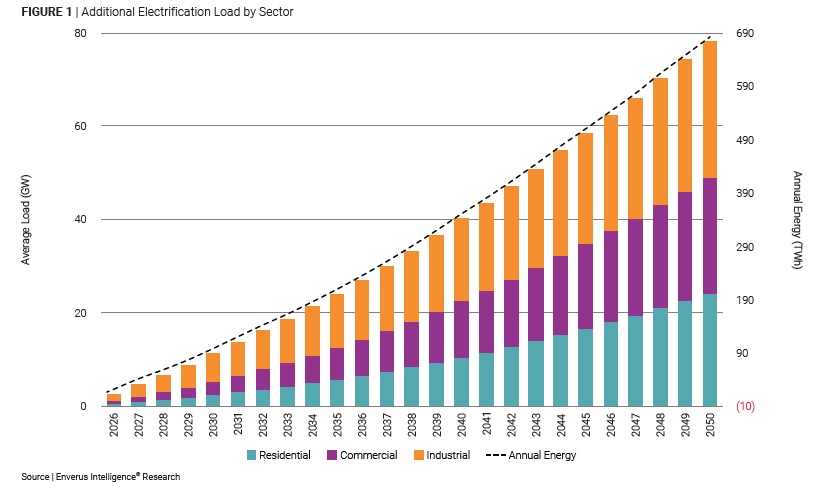
Enverus Intelligence Research (EIR), a subsidiary of Enverus, an energy data analytics platform, has released its latest report, Electrification Load Forecast: The L48 Goes Electric, highlighting the growing role of electrification in shaping U.S. power demand. Electrification is expected to add approximately 24 GW of incremental load by 2035 and about 78 GW by 2050 across the Lower 48, driven by the transition from fuel-based technologies to electric alternatives in industrial processes and space heating. Electrification will account for roughly 4.1 percent of total U.S. load by 2035, signaling a meaningful but regionally uneven shift in demand.
Growth is highly concentrated, with PJM, MISO and NYISO accounting for 69 percent of incremental load by 2035, reflecting their combination of gas-reliant building stock, industrial demand and large-scale heating transitions. At the same time, some regions are expected to see flat or declining load as efficiency gains from technologies such as heat pumps offset new demand.
Kevin Kang, report author and senior analyst at EIR, said, “Electrification is emerging as a measurable and regionally concentrated driver of U.S. load growth, with industrial demand and heating transitions leading the increase. At the same time, efficiency gains and regional differences in heating technology mean the impact on load is not uniform and will reshape grid dynamics, including increased winter sensitivity and market volatility.”
Industrial electrification represents the largest share of incremental demand, contributing 11.4 GW, or 47 percent of total load growth by 2035. Commercial and residential sectors follow, adding 6.8 GW (29 percent) and 5.7 GW (24 percent), respectively, as building heating systems shift toward electric alternatives.

Regional dynamics are shaped by differences in existing heating infrastructure. Areas that rely heavily on gas or oil heating are expected to see increased electricity demand as electrification accelerates, while regions with existing electric resistance heating may experience net load reductions as more efficient heat pumps reduce overall consumption.
Policy is also a key driver. State-level electrification mandates, particularly in colder regions, are expected to drive significant relative load increases, including projected growth of 27 percent in ISO New England and 21 percent in New York ISO by 2035. These shifts are likely to increase winter weather sensitivity and contribute to greater market volatility.