









As the United States reaches its 250th anniversary of its birth, many are looking back and looking forward. As for looking forward, if there’s one thing I wish for this country to possess in the years to come, it is a true, functioning news media, respected and heeded by the public. Only with that can a nation fend off corruption, hold up the reprehensible to fullest scrutiny, and best treat the ills of society.
It’s ironic that the rise of “citizen journalism” at the expense of established media was heralded as a step forward in communications, transparency, and accountability. While it is undeniable that such practices as podcasting, blogging, and social media posting have given voice to many who never before had it, this change has hastened the demise of weightier institutional media and its methods of heavily vetted journalism. Plus, it did away with the good effects that sprang from that media’s work, at least when in times past that media did its job as it should have.
Of course, big media has lately been its own worst enemy—indulging its taste for “advocacy journalism” over its prior disciplines of objectivity, disinterestedness, and neutrality, as well as the prior practice of clear, consistent attribution of sources. So media’s problem has arisen from without and within.
 Attribution all-but-vanished when the public became accepting of anonymous sources. Read the Washington Post or New York Times or any once-eminent bastion of journalism. Observe how often their citations are “according to a source close to the matter.” Wait… what? Sounds like lack of transparency. Anonymity is granted to almost anyone who will spill the beans or who will make an allegation. Now, how is the public to trust in that unnamed person’s veracity? Why should reporters run interference for sources who want to snipe from behind cover? That might get your source to talk, but in allowing it, you have compromised your own principles and undermined your own enterprise.
I started seeing how true journalism works for society when I was in my early years as a reporter. I worked for a newspaper in the American City Business Journals chain. My beat was the financial community. I quickly found that a large number of my assignments involved covering some kind of malfeasance or questionable practices or outright wrongdoing at some particular financial institution or another. That’s just the nature of the work. Newspapers apply themselves to matters that are anomalous or suspicious-sounding—especially if the issue is something that could potentially be deleterious to the public. Sometimes one will hear someone accuse the media of writing only bad news, not good. But good news poses no potential harm to anyone. Good news is life as we expect it to be. It’s not “news,” in that sense.

But my assignments were often the bad stuff. And while the people I was calling and interviewing were not (yet) charged with crimes, they sometimes had at least behaved suspiciously or shadily. And so after a number of months of this, it struck me that my job was devoted to, at least in part, covering white collar crime.
The articles that arose from those efforts put certain individuals up for public scrutiny. This had, in turn, a positive effect overall, for the community, in that it nudged the called-out individuals into a posture of curbing or amending their behaviors, if only to escape further public scrutiny.
It was through this work that I slowly began to realize how much an honest media does to suppress crime in society. Not every misdeed gets noticed by the police. Not every malfeasance gets examined—especially in business or in government, where the crimes, when they occur, are murkier. Sometimes newspaper articles raise questions that get investigated by district attorneys—and such might not happen if the only watchdogs are cops on the street—who aren’t digging into paper trails or poring over public records.
So when highly organized, highly specialized, large-staffed media disappear from the scene, bad things can flourish. A podcaster or a blogger can’t deploy the workforce it takes to beat the bushes. Chances are, that blogger is devoting his content to angles that get clicks—not necessarily to stories that serve the public’s right to know.
I used to get phone calls from informants. Tipsters. This was back before cell phones predominated. I’d answer my desk phone and the caller, without identifying himself or herself, would start telling me about wrongful or reprehensible doings at some financial institution or another. They’d quickly end, because while they didn’t disclose their identity, calls back then could be traced. (Although that would have required law enforcement plus minutes’ worth of time, and I had neither going for me.) But some of those calls led to articles. I had to find sources who would speak on the matter, with names attached, but such things can be done if one knows the rudiments of the situation at hand.
Media that exposes misdeeds becomes media that attracts informants to itself. It’s a cycle that makes life better—for good people, anyway. The newspaper was the community watchdog. A blogger or influencer is not necessarily any community’s watchdog.
When “citizen journalism” took root in the early 21st century, many hailed it as a glorious defeat for the “gatekeeper” that was traditional media. Finally, writers could bypass the hated gatekeeper. True enough, they could. But it was also an end to the vetting and professionalism that went hand in hand with big newspaper enterprises. There, everyone was held to a common ethic, and advancement and power did not flow to a person until competence was established. Articles had to run the gamut of internal scrutiny. The whole company had its name riding on every assertion. The very thing about “gatekeepers” that makes them hated is a thing that keeps standards high and ferrets out shortcuts, unprofessionalism, and lack of talent.
If we want this country to be anything like the nation it was for 250 years, we need a functioning news media. Not a bureau of advocacy. Not a scattering of mostly individual voices, each working all but alone. Such people don’t have the clout to compel a press conference.
Here’s what will fix media: the public itself must understand media, and understand that media is trustworthy only with named sources and carefully cited disclosures—disclosures that anyone can independently confirm if he or she takes the trouble. Only when the public rejects the bad and embraces the good—only then will traditional, effective media re-emerge. And when it does, we get our country back. We need transparency in order to function. Let that be our blessing in the next 250 years—a restoration of the Fourth Estate.
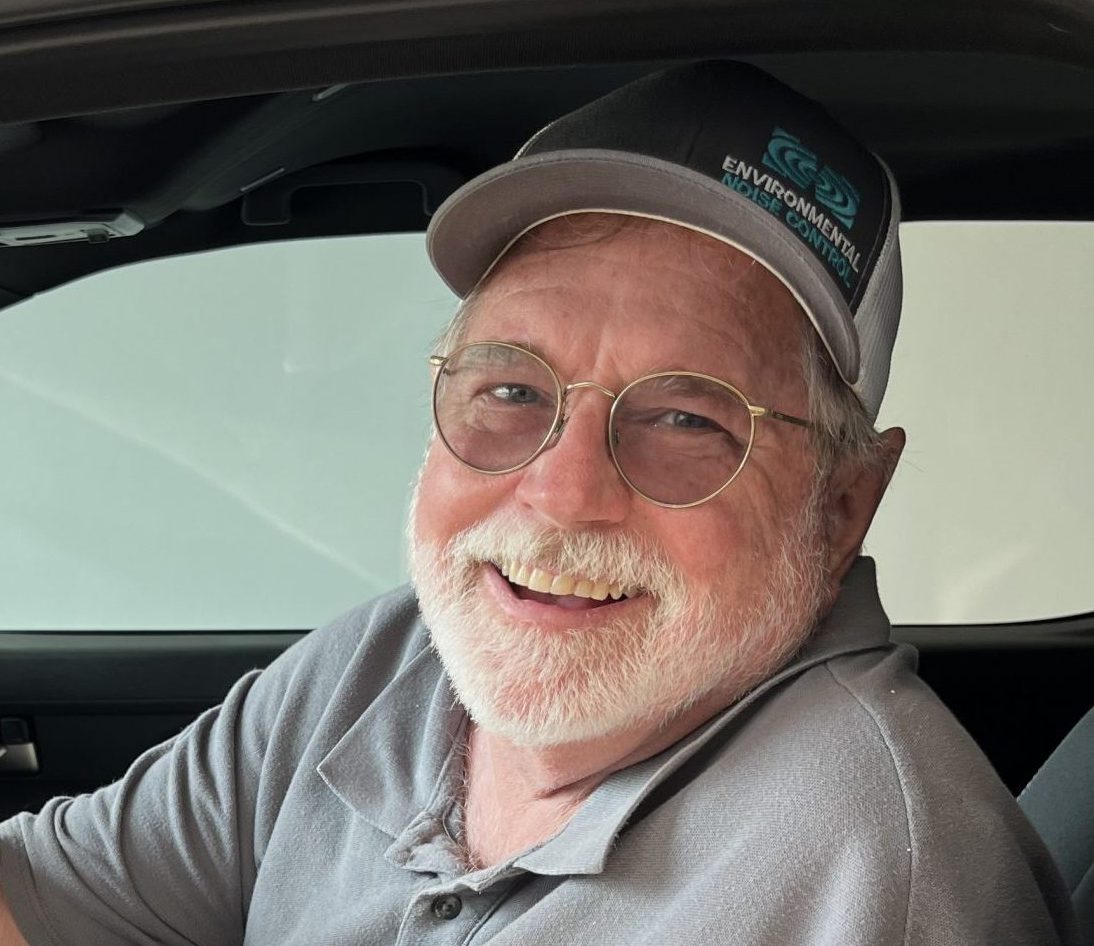
Jesse Mullins, Editor
Jesse Mullins, editor of Permian Basin Oil and Gas, remembers so well the times of those mean old managing editors being mean to him. An old-school bureau chief or city desk editor could, if they were here today, make an influencer out of a reporter in no time flat.

Spot on, Jesse. I grew up in the pressroom of a daily newspaper in Tennessee. I spent over 20 years as a “Gypsy Printer.” At the start I had an old 1969 Chevy 6 cylinder pickup – no air, no power steering, etc. and it was well used when I got it. After I earned my certification as a machinist and after learning the newer “offset” printing method, I loaded up my machinist’s tool box, a bag of work clothes and my Harley and started working as gypsy printer, installing, rebuilding, training crews on newspaper and commercial presses around the country.
At the first whiff of problems in the newspaper biz I bought a small newspaper in Montana. I figured the panic would never come to the small community newspapers.
It has. Weekly, community-based newspapers up here are dropping like flies. And now we have non-profits – well funded – popping up and becoming a digital version of a newspaper – but these are, in quite a few cases, made up of writers that are far from the middle of the road. They are good writers, but they cut their chops at the corporate newspaper chains, like Gannett and Lee Enterprises.
After moving here and getting to know quite a few oil folks and covering oil and gas in this neck of the woods, I now wish I had headed to Texas 50 years ago in that old Chevy.
Great magazine!